
How to Evaluate ISBM Machine Production Capacity: Practical Technical Guide
How to Evaluate ISBM Machine Production Capacity is a practical engineering question, so this guide starts with good-bottle basis, moves through cycle time, and ends with bottle-level verification rather than generic ISBM background.
Good-bottle basisAir systemAcceptance run
Apa yang harus dibuktikan oleh artikel ini
Verify whether a proposed isbm machine can deliver the required saleable output on the actual bottle instead of relying on theoretical catalog throughput. A defensible baseline begins with Capacity should be measured as bottles that pass agreed quality checks, not all ejected pieces. The first verification method is Define reject categories and count good parts over a representative production period. From there, the article follows only checks that can materially change the answer promised by the title. Where an exact operating value depends on the resin grade, bottle drawing, mold, or delivered machine, the approved project specification controls the final setting.
✔️ Good-bottle basis
Capacity should be measured as bottles that pass agreed quality checks, not all ejected pieces. Define reject categories and count good parts over a representative production period.
✔️ Cycle time
Measure stable automatic cycle time after the machine, mold and utilities reach normal operating condition. Use controller cycle data and verify with timed production counts rather than one best observed cycle.
✔️ Cavitation
Multiply good parts per cycle by cycles per hour, then account for cavity-specific rejects or disabled cavities. Track reject rate by cavity so one problem location cannot hide inside total output.
Define Capacity as Good Output
Good-bottle basis
Good-bottle basis. Capacity should be measured as bottles that pass agreed quality checks, not all ejected pieces. Define reject categories and count good parts over a representative production period. Judge good-bottle basis during a sustained run after thermal stabilization rather than from a short best-case demonstration. Once this check is stable, the next useful question is whether good-bottle basis changes the same bottle region or affects a different part of the process. A high gross rate with unstable wall thickness or frequent visual rejects is not useful capacity.
Untuk topik ini, maka... portofolio mesin ISBM satu langkah menyediakan konteks peralatan yang berguna untuk menghubungkan persyaratan proses dengan platform resin-ke-botol terintegrasi.
Rebuild the Cycle from Its Limiting Operations
Cycle time
Cycle time. Measure stable automatic cycle time after the machine, mold and utilities reach normal operating condition. Use controller cycle data and verify with timed production counts rather than one best observed cycle. Judge cycle time during a sustained run after thermal stabilization rather than from a short best-case demonstration. This checkpoint should be evaluated before cycle time is altered, because otherwise two process mechanisms change at the same time. Startup cycles can be slower or faster than steady state and distort estimates.
Kavitasi
Cavitation. Multiply good parts per cycle by cycles per hour, then account for cavity-specific rejects or disabled cavities. Track reject rate by cavity so one problem location cannot hide inside total output. Judge cavitation during a sustained run after thermal stabilization rather than from a short best-case demonstration. For this topic, the engineering log should connect cavitation with the observed bottle condition and then test whether cavitation supports the same diagnosis. A nominal eight-cavity mold running seven reliable cavities has a different capacity than the label suggests.
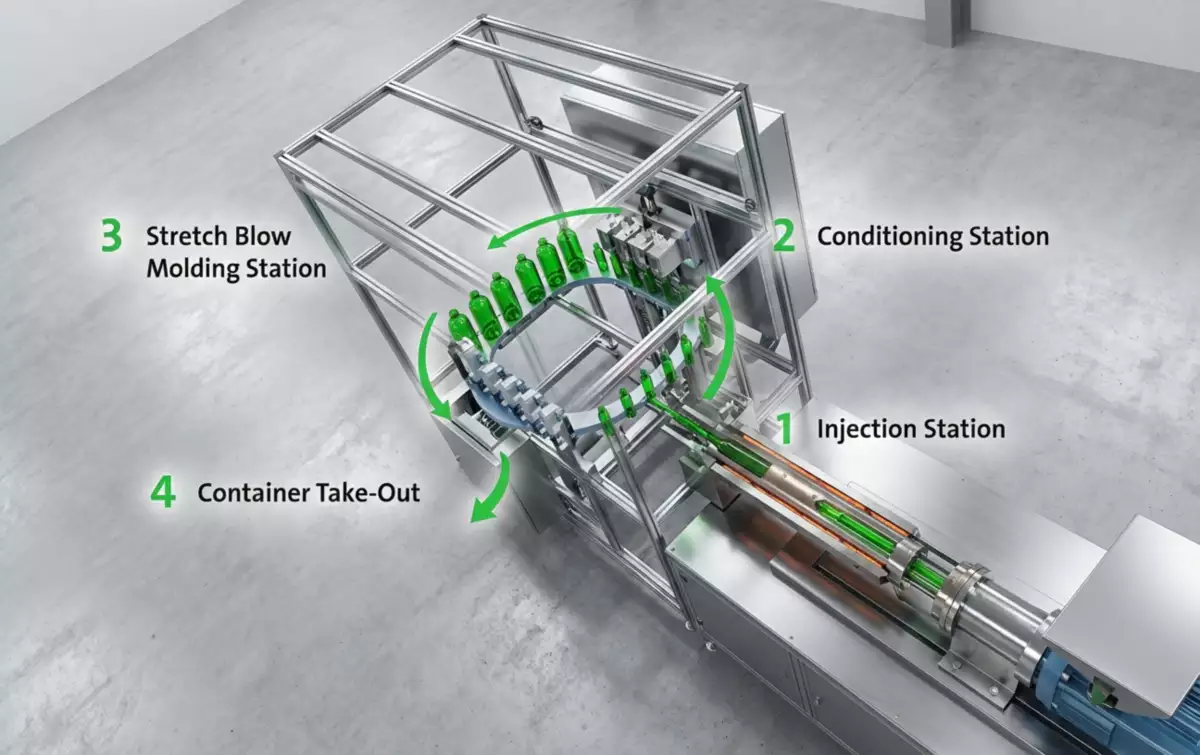
Check Cavity Count and Yield
Injection recovery
Injection recovery. Check whether screw recovery completes with margin before the next injection event. Trend recovery time, melt temperature and cushion over a sustained run. Judge injection recovery during a sustained run after thermal stabilization rather than from a short best-case demonstration. Do not judge this factor from the HMI value alone; pair it with the actual bottle result, then continue with injection recovery only after the relationship is clear. If recovery becomes the bottleneck, speeding transfer or blowing will not increase total output.
Ketentuan kerja untuk tugas khusus ini
- Good-bottle basis
- Capacity should be measured as bottles that pass agreed quality checks, not all ejected pieces.
- Cycle time
- Measure stable automatic cycle time after the machine, mold and utilities reach normal operating condition.
- Kavitasi
- Multiply good parts per cycle by cycles per hour, then account for cavity-specific rejects or disabled cavities.
- Injection recovery
- Check whether screw recovery completes with margin before the next injection event.
Confirm Injection and Cooling Recovery
Cooling constraint
Cooling constraint. Observe preform release, neck stability, bottle demolding and base temperature as cycle time is reduced. Shorten one phase at a time and watch for delayed defects after parts leave the mold. Judge cooling constraint during a sustained run after thermal stabilization rather than from a short best-case demonstration. Keep cooling constraint at its validated baseline while this item is tested so the bottle response can be attributed to one cause. A bottle can appear acceptable at ejection but deform during downstream handling if cooling is insufficient.
Air system
Air system. Record blow-air pressure at the machine during the actual blow pulse, not only compressor discharge pressure. Trend pressure across several cycles and during simultaneous demand from other equipment. Judge air system during a sustained run after thermal stabilization rather than from a short best-case demonstration. Use the smallest controlled change that can prove the effect of air system, then restore the baseline before a different adjustment such as air system is tried. Header pressure sag can cause intermittent under-blow defects and reduce sustainable speed.
| Barang | Pertanyaan teknik | Verifikasi praktis |
|---|---|---|
| Good-bottle basis | Capacity should be measured as bottles that pass agreed quality checks, not all ejected pieces. | Define reject categories and count good parts over a representative production period. |
| Cycle time | Measure stable automatic cycle time after the machine, mold and utilities reach normal operating condition. | Use controller cycle data and verify with timed production counts rather than one best observed cycle. |
| Kavitasi | Multiply good parts per cycle by cycles per hour, then account for cavity-specific rejects or disabled cavities. | Track reject rate by cavity so one problem location cannot hide inside total output. |
| Injection recovery | Check whether screw recovery completes with margin before the next injection event. | Trend recovery time, melt temperature and cushion over a sustained run. |
| Cooling constraint | Observe preform release, neck stability, bottle demolding and base temperature as cycle time is reduced. | Shorten one phase at a time and watch for delayed defects after parts leave the mold. |
| Air system | Record blow-air pressure at the machine during the actual blow pulse, not only compressor discharge pressure. | Trend pressure across several cycles and during simultaneous demand from other equipment. |
| Kondisi rilis | Use a defined run duration, product specification and sampling plan to demonstrate repeatable output. Record cycle, cavitation, rejects, utilities and interventions so results can be reproduced after installation. | |
Confirm Blow-Air and Utility Stability
Material preparation
Material preparation. Verify dryer stability, feed rate and resin condition during the capacity test. Record dew-point or moisture-control indicators required by the resin and confirm no material starvation. Judge material preparation during a sustained run after thermal stabilization rather than from a short best-case demonstration. This factor belongs in the setup sheet because it directly changes the conditions under which material preparation is evaluated. Capacity tests with perfectly prepared small batches may not represent production material handling.
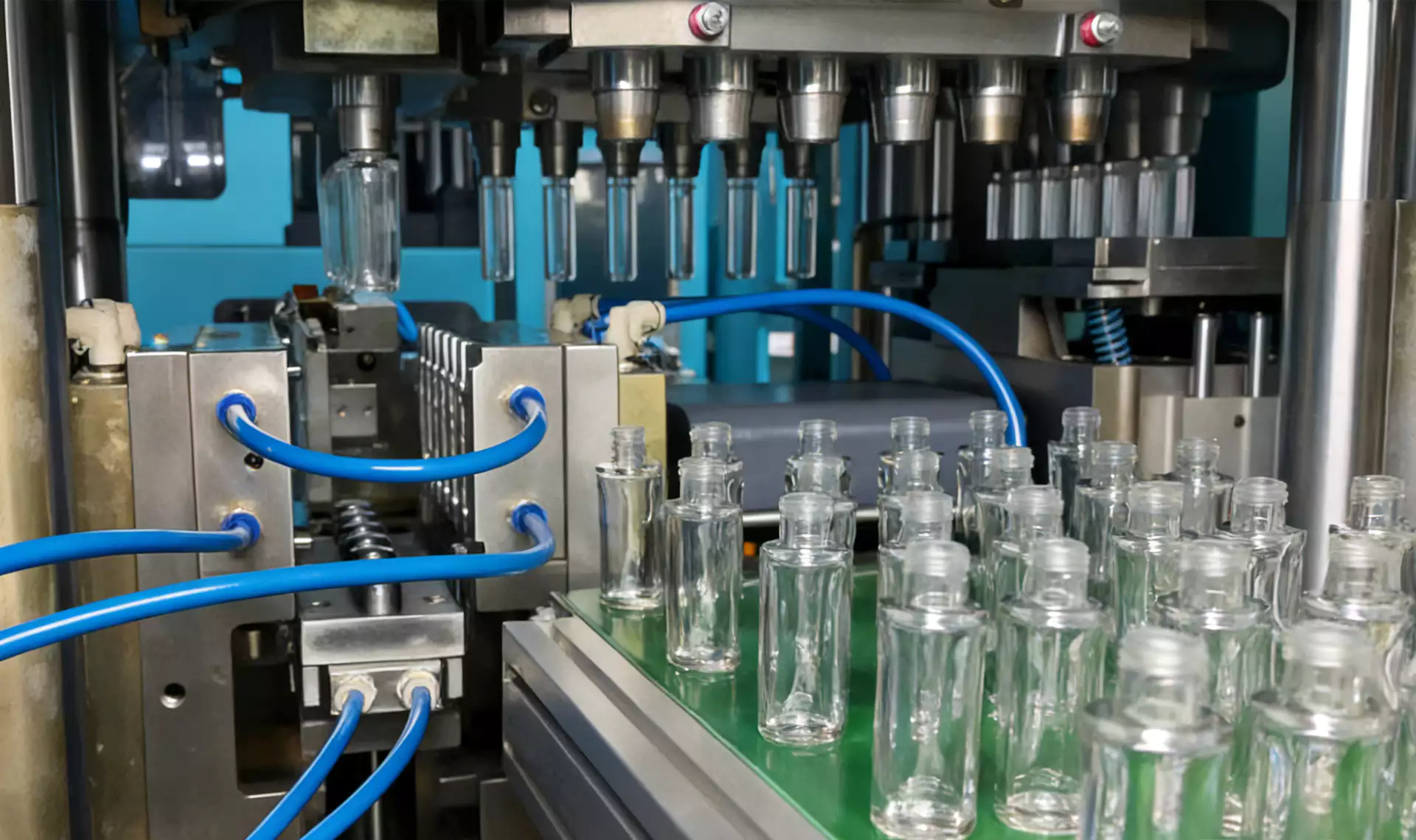
Run a Sustained Capacity Trial
Minor stops
Minor stops. Count alarms, manual interventions, bottle jams, part sticking and automatic restart delays. Calculate run time, minor-stop time and quality loss separately. Judge minor stops during a sustained run after thermal stabilization rather than from a short best-case demonstration. If the result differs by cavity, compare the local hardware related to minor stops before moving on to minor stops. A fast cycle with frequent ten-second stops can produce less per shift than a slower stable process.
When translating the requirement into hardware, the HGY50-V3-EV machine configuration illustrates how injection, thermal conditioning, stretch-blow motion, and handling are organized on a compact one-step platform.
Changeover impact
Changeover impact. Include mold and recipe change time when the plant makes multiple SKUs. Convert weekly production schedule into total good bottles rather than assuming one continuous product. Judge changeover impact during a sustained run after thermal stabilization rather than from a short best-case demonstration. This item is considered resolved only when the finding remains repeatable after thermal stabilization and the next check, changeover impact, does not contradict it. Catalog capacity usually excludes time lost to changeovers.
Convert Trial Results into Monthly Capacity
Acceptance run
Acceptance run. Use a defined run duration, product specification and sampling plan to demonstrate repeatable output. Record cycle, cavitation, rejects, utilities and interventions so results can be reproduced after installation. Judge acceptance run during a sustained run after thermal stabilization rather than from a short best-case demonstration. For repeatability, define who measures acceptance run, where it is measured, and what bottle evidence is required before checking acceptance run. A short showroom run can miss thermal drift, air-system interaction and operator recovery issues.
Changeover impact: release evidence
Include mold and recipe change time when the plant makes multiple SKUs. Convert weekly production schedule into total good bottles rather than assuming one continuous product. The condition is accepted only when the relevant bottle measurement or functional test remains stable after the process reaches normal operating temperature.
Acceptance run: failure boundary
A short showroom run can miss thermal drift, air-system interaction and operator recovery issues. Use that failure mode as the boundary for the trial and return to the previous stable condition when the bottle response moves in the wrong direction.
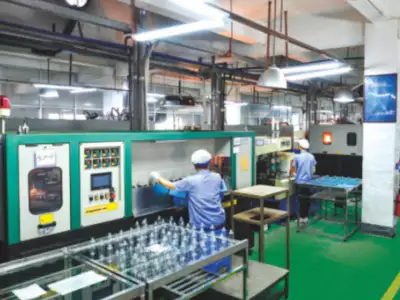
Capacity formulas and how to interpret them
Cycles per hour = 3,600 / stable cycle time in seconds. Gross bottles per hour = cycles per hour × active cavities. Good bottles per hour = gross bottles per hour × first-pass yield. These equations are useful only when the cycle and yield come from a stable run using the intended bottle, resin, mold, and utilities.
For monthly planning, multiply good bottles per hour by actual scheduled molding hours after planned changeovers and maintenance. Keep unscheduled losses visible instead of hiding them inside an arbitrary derating factor, because those losses are the improvement opportunities.
For tooling-related decisions, the ASB-12 replacement mold engineering highlights why dimensional interfaces, cooling connections, cavity geometry, and transfer alignment must be treated as part of the machine setup.
Questions that arise specifically in How to Evaluate ISBM Machine Production Capacity
How do I calculate theoretical output?
The simple basis is cavities multiplied by cycles per hour, but practical capacity must also include yield and operating availability.
Why is supplier capacity different from my plant output?
Bottle geometry, resin, mold cooling, utilities, operating schedule and reject criteria can all differ from the conditions behind a published figure.
How long should a capacity test run?
Long enough for machine, mold and utilities to reach stable thermal conditions and to reveal recurring minor stops. Define the duration in the acceptance plan.
Should rejects count against capacity?
Yes when the business requirement is saleable bottles. Gross ejection rate is useful for diagnosis but not for production planning.
What utility measurement is most important?
All critical utilities matter. Blow-air pressure at the machine during the blow event and cooling-water conditions are particularly important because short disturbances can affect bottle quality.
Kesimpulan praktis
The working method for How to Evaluate ISBM Machine Production Capacity is evidence first: establish good-bottle basis, isolate the effect of air system, and use acceptance run as the final production check. A high gross rate with unstable wall thickness or frequent visual rejects is not useful capacity.