
PET vs PP for ISBM Bottles: How to Choose: Practical Technical Guide
The useful answer to PET vs PP for ISBM Bottles: How to Choose comes from the interaction between appearance, chemical compatibility, and selection rule. The sections below turn those factors into checks that can be repeated on a production machine.
AppearanceChemical compatibilitySelection rule
What this article must prove
Choose pet or pp for a specific isbm bottle by comparing clarity, stiffness, heat behavior, moisture sensitivity, stretch response, barrier needs, sterilization, closure design and end-use requirements. A defensible baseline begins with PET is widely selected where high clarity and glass-like appearance matter, while PP is naturally more translucent unless modified or specially processed. The first verification method is Define haze, gloss, color and wall-thickness appearance targets using approved package samples. From there, the article follows only checks that can materially change the answer promised by the title. Where an exact operating value depends on the resin grade, bottle drawing, mold, or delivered machine, the approved project specification controls the final setting.
✔️ Appearance
PET is widely selected where high clarity and glass-like appearance matter, while PP is naturally more translucent unless modified or specially processed. Define haze, gloss, color and wall-thickness appearance targets using approved package samples.
✔️ Stiffness and feel
PET can produce stiff, clear oriented bottles; PP can offer a softer hand and different hinge or squeeze behavior. Test top load, squeeze recovery and panel feel at the actual wall distribution.
✔️ Stretching response
PET and PP have different orientation temperature windows and strain behavior. Confirm the machine can create the required preform thermal profile and stretch timing for the selected grade.
A demanding shape case such as the wide-mouth container ISBM application is useful for checking whether the same process logic remains stable when projected area, heat balance, and material distribution become harder to control.
Start with the Package Requirement
Appearance
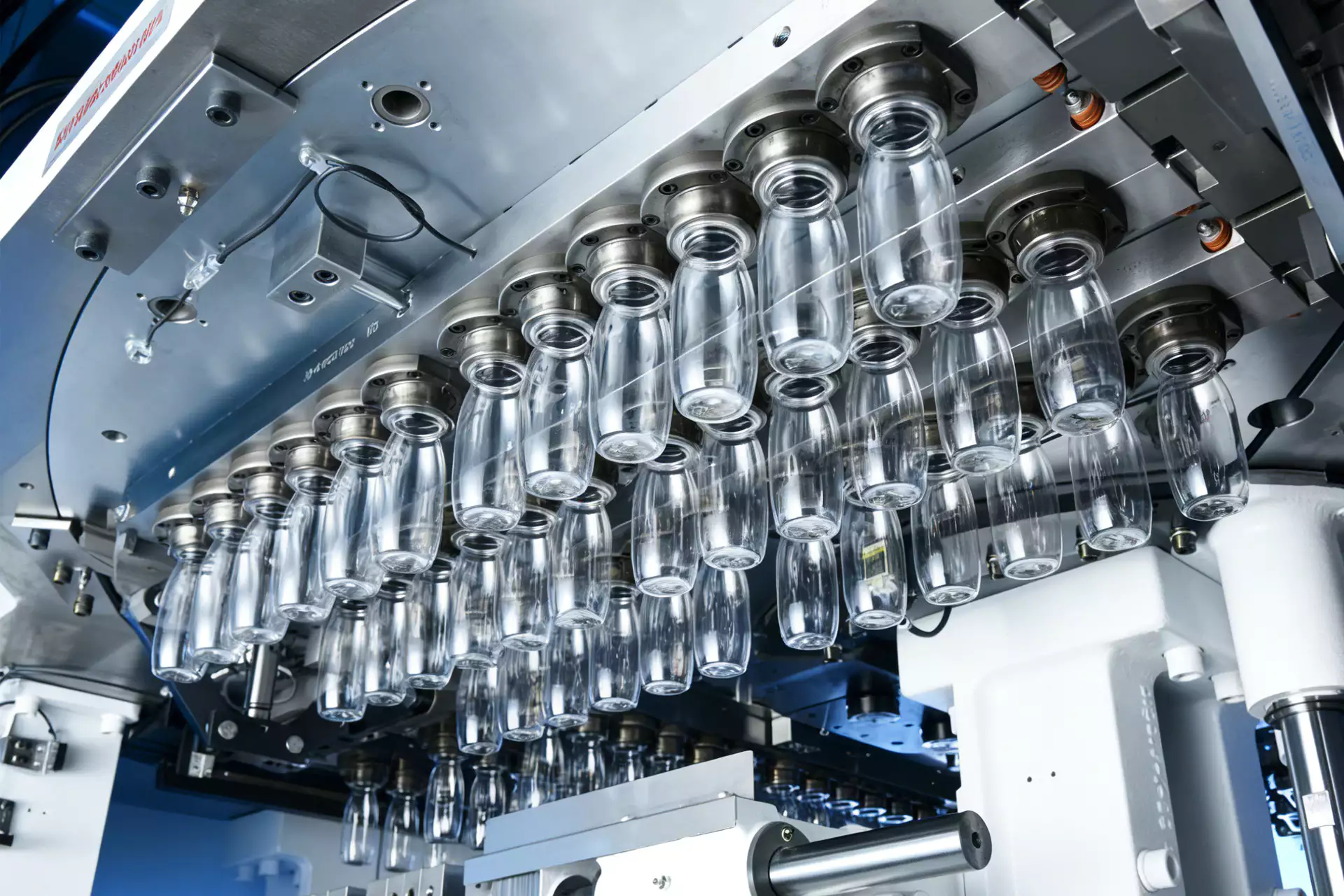
Appearance. PET is widely selected where high clarity and glass-like appearance matter, while PP is naturally more translucent unless modified or specially processed. Define haze, gloss, color and wall-thickness appearance targets using approved package samples. Compare both options against the same bottle geometry, resin, good-output target, and quality criteria when judging appearance. If a change improves one region but worsens another, compare the material or energy movement between appearance and appearance instead of accepting the first visual improvement. Choosing solely by resin cost can miss a premium appearance requirement that the material cannot meet easily.
Clarity, Gloss and Appearance
Stiffness and feel
Stiffness and feel. PET can produce stiff, clear oriented bottles; PP can offer a softer hand and different hinge or squeeze behavior. Test top load, squeeze recovery and panel feel at the actual wall distribution. Compare both options against the same bottle geometry, resin, good-output target, and quality criteria when judging stiffness and feel. Where the outcome depends on material grade or tooling geometry, confirm the approved project limit and then use stiffness and feel as the next cross-check. Material property tables do not replace bottle-level tests because orientation and geometry change performance.
Stretch Behavior and Process Window
Stretching response
Stretching response. PET and PP have different orientation temperature windows and strain behavior. Confirm the machine can create the required preform thermal profile and stretch timing for the selected grade. Compare both options against the same bottle geometry, resin, good-output target, and quality criteria when judging stretching response. When the project is near a machine or material limit, require a molding trial that isolates stretching response and then challenges stretching response under the same bottle specification. Copying a PET recipe into PP can produce uneven distribution or poor surface quality.
Heat exposure
Heat exposure. PP is often considered where higher use temperature or hot-water contact is important, while PET heat performance depends strongly on grade, orientation and heat-setting strategy. Define fill temperature, sterilization or washing exposure and duration before selecting resin. Compare both options against the same bottle geometry, resin, good-output target, and quality criteria when judging heat exposure. The safest interpretation comes from comparing at least several stable cycles and then verifying heat exposure without changing the rest of the recipe. A bottle can survive molding yet distort during the customer thermal cycle if heat requirements were not specified.
Working terms for this specific task
- Appearance
- PET is widely selected where high clarity and glass-like appearance matter, while PP is naturally more translucent unless modified or specially processed.
- Stiffness and feel
- PET can produce stiff, clear oriented bottles; PP can offer a softer hand and different hinge or squeeze behavior.
- Stretching response
- PET and PP have different orientation temperature windows and strain behavior.
- Heat exposure
- PP is often considered where higher use temperature or hot-water contact is important, while PET heat performance depends strongly on grade, orientation and heat-setting strategy.
Heat Resistance and Hot-Use Needs
Moisture handling
Moisture handling. PET normally requires disciplined drying before melt processing; PP is less moisture-sensitive but contamination and material condition still matter. Design the material-handling system around the actual resin supplier requirements. Compare both options against the same bottle geometry, resin, good-output target, and quality criteria when judging moisture handling. A useful production trial keeps the resin lot and cavity identification fixed while moisture handling is changed, followed by a separate check of moisture handling. Applying the wrong drying philosophy can add energy cost or leave a moisture-sensitive resin underprepared.
| Articolo | Engineering question | Practical verification |
|---|---|---|
| Appearance | PET is widely selected where high clarity and glass-like appearance matter, while PP is naturally more translucent unless modified or specially processed. | Define haze, gloss, color and wall-thickness appearance targets using approved package samples. |
| Stiffness and feel | PET can produce stiff, clear oriented bottles; PP can offer a softer hand and different hinge or squeeze behavior. | Test top load, squeeze recovery and panel feel at the actual wall distribution. |
| Stretching response | PET and PP have different orientation temperature windows and strain behavior. | Confirm the machine can create the required preform thermal profile and stretch timing for the selected grade. |
| Heat exposure | PP is often considered where higher use temperature or hot-water contact is important, while PET heat performance depends strongly on grade, orientation and heat-setting strategy. | Define fill temperature, sterilization or washing exposure and duration before selecting resin. |
| Moisture handling | PET normally requires disciplined drying before melt processing; PP is less moisture-sensitive but contamination and material condition still matter. | Design the material-handling system around the actual resin supplier requirements. |
| Chemical compatibility | Product formula, oils, alcohols, surfactants or flavors can interact differently with polymers. | Run storage and migration/compatibility testing appropriate to the product and regulatory use. |
| Release condition | Choose the resin that meets product safety, bottle performance, process stability, appearance and end-of-life requirements at acceptable total cost. Score the two materials against mandatory package tests and machine capability before cutting production tooling. | |
Barrier and Product Compatibility
Chemical compatibility
Chemical compatibility. Product formula, oils, alcohols, surfactants or flavors can interact differently with polymers. Run storage and migration/compatibility testing appropriate to the product and regulatory use. Compare both options against the same bottle geometry, resin, good-output target, and quality criteria when judging chemical compatibility. The practical value of this check is that it turns chemical compatibility from a vague setting into evidence that can be compared with chemical compatibility. A bottle that passes molding tests can fail after weeks of product contact.
IL ASB-12 injection tooling replacement is a useful equipment example when the task involves mold exchange, dimensional matching, cooling performance, or repeatable transfer between ISBM stations.
Neck, Hinge and Squeezability Requirements
Barrier needs
Barrier needs. Oxygen, carbon dioxide, aroma and moisture transmission requirements depend on the packaged product and shelf life. Use packaging performance tests rather than assuming one polymer is always the better barrier. Compare both options against the same bottle geometry, resin, good-output target, and quality criteria when judging barrier needs. Use this result to narrow the process window, not to create a new universal setpoint; the next constraint to confirm is barrier needs. Insufficient barrier can reduce shelf life even when mechanical performance is excellent.
Neck and closure
Neck and closure. Closure torque, thread stiffness, sealing surface and tamper features must match material behavior. Validate capping and leak performance across temperature and aging conditions. Compare both options against the same bottle geometry, resin, good-output target, and quality criteria when judging neck and closure. The expected response should be visible in a bottle measurement, defect map, or machine trend before the team proceeds to neck and closure. A softer or more flexible neck may require a different closure design than a rigid PET finish.
Drying and Material Handling
Recycling and market system
Recycling and market system. Material choice should consider the collection and recycling stream where the package will be sold. Check local design-for-recycling requirements for labels, color, additives and closures. Compare both options against the same bottle geometry, resin, good-output target, and quality criteria when judging recycling and market system. Once this check is stable, the next useful question is whether recycling and market system changes the same bottle region or affects a different part of the process. A technically moldable package can be commercially undesirable if it conflicts with the intended recycling stream.
Decision Examples for Common Bottle Types
Selection rule
Selection rule. Choose the resin that meets product safety, bottle performance, process stability, appearance and end-of-life requirements at acceptable total cost. Score the two materials against mandatory package tests and machine capability before cutting production tooling. Compare both options against the same bottle geometry, resin, good-output target, and quality criteria when judging selection rule. This checkpoint should be evaluated before selection rule is altered, because otherwise two process mechanisms change at the same time. There is no universal PET-versus-PP winner across all ISBM bottles.
Recycling and market system: release evidence
Material choice should consider the collection and recycling stream where the package will be sold. Check local design-for-recycling requirements for labels, color, additives and closures. The condition is accepted only when the relevant bottle measurement or functional test remains stable after the process reaches normal operating temperature.
Selection rule: failure boundary
There is no universal PET-versus-PP winner across all ISBM bottles. Use that failure mode as the boundary for the trial and return to the previous stable condition when the bottle response moves in the wrong direction.
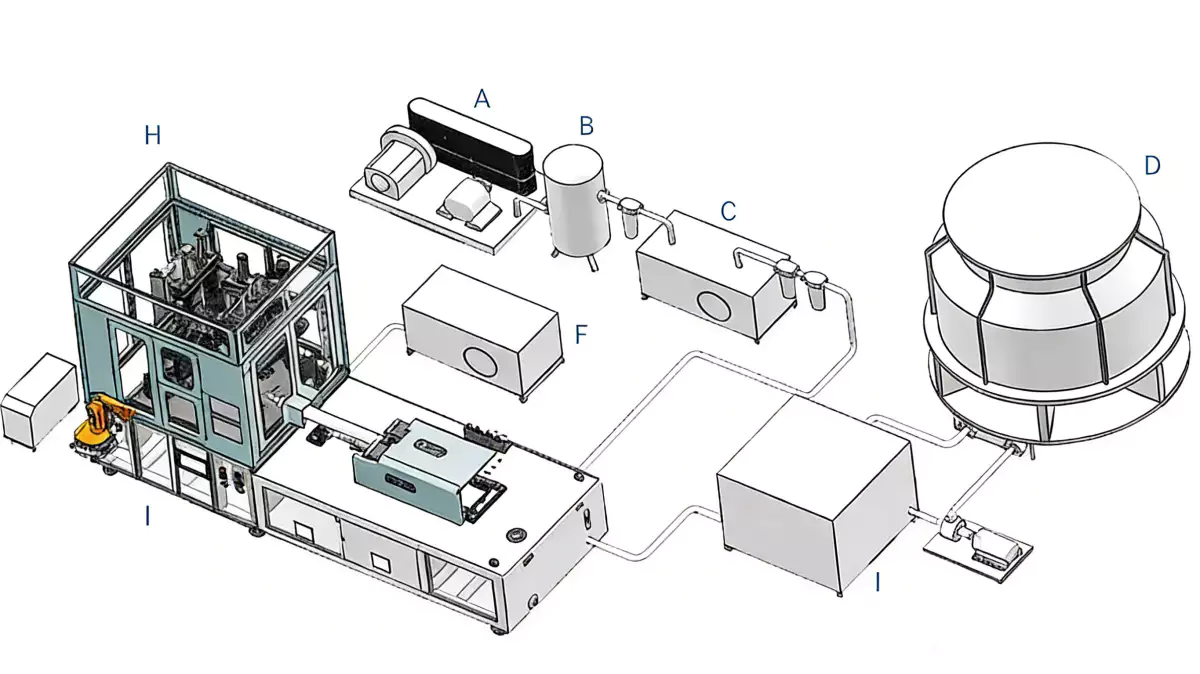
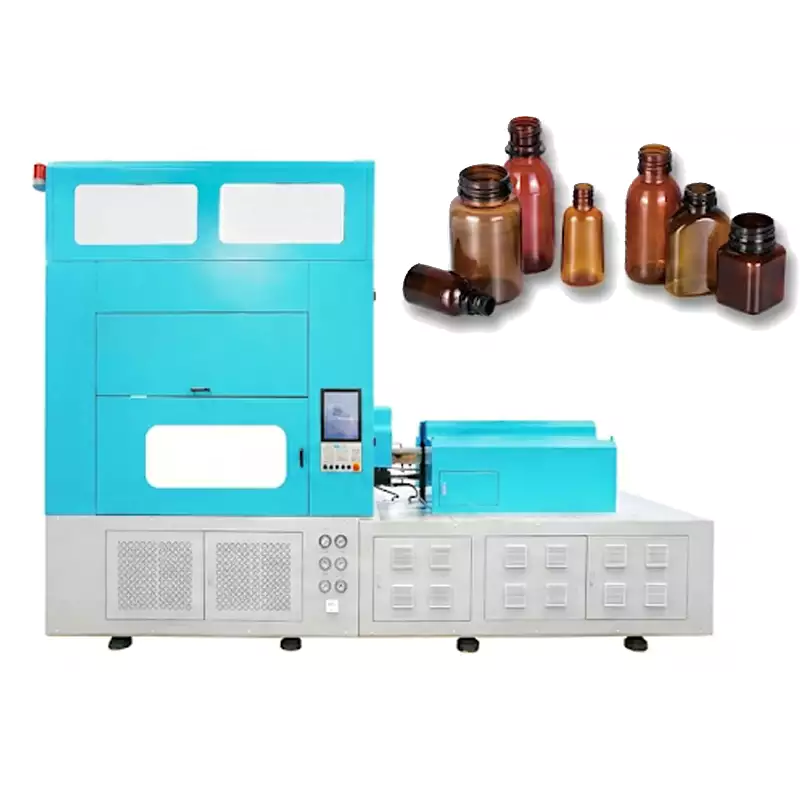
For this topic, the one-step ISBM machine portfolio provides useful equipment context for connecting the process requirement to an integrated resin-to-bottle platform.
Questions that arise specifically in PET vs PP for ISBM Bottles: How to Choose
Which is clearer, PET or PP?
PET is commonly chosen for very clear oriented packaging. PP can be translucent or clarified, but the target appearance should be verified on molded bottles.
Which material is easier to dry?
PP is generally less moisture-sensitive, while PET usually requires controlled drying. Always follow the specific grade guidance.
Can the same ISBM machine run PET and PP?
Some machines can, but plasticizing, thermal conditioning, stretch behavior and mold temperature requirements differ. Confirm the exact machine configuration.
Which is better for hot-use bottles?
Define the actual temperature cycle first. Resin grade, bottle design and heat-setting or sterilization conditions determine suitability.
Should recyclability decide the material?
It is one important factor along with product compatibility, performance, processing and local collection infrastructure.
Practical conclusion
A robust answer to PET vs PP for ISBM Bottles: How to Choose should survive a restart and a full thermal stabilization period. The setup record should therefore connect appearance with chemical compatibility and the bottle result from selection rule. A bottle that passes molding tests can fail after weeks of product contact.