
ISBM Machines for Edible Oil Bottles: Buying Guide: Practical Technical Guide
This guide treats ISBM Machines for Edible Oil Bottles: Buying Guide as a sequence of measurable decisions. It begins with the physical product requirement, then tests the process mechanisms that can change the bottle, and finishes with a release condition that can be documented.
Package size rangeBase stabilityAcceptance test
What this article must prove
Select an isbm machine for edible-oil bottles by balancing resin and product compatibility, handle or grip geometry, wall distribution, closure seal, top load, output, changeover and cleaning. A defensible baseline begins with List fill volumes, bottle weights, neck finishes and family shapes. The first verification method is Size the machine against the heaviest shot and largest mold envelope, then verify smaller formats remain practical. From there, the article follows only checks that can materially change the answer promised by the title. Where an exact operating value depends on the resin grade, bottle drawing, mold, or delivered machine, the approved project specification controls the final setting.
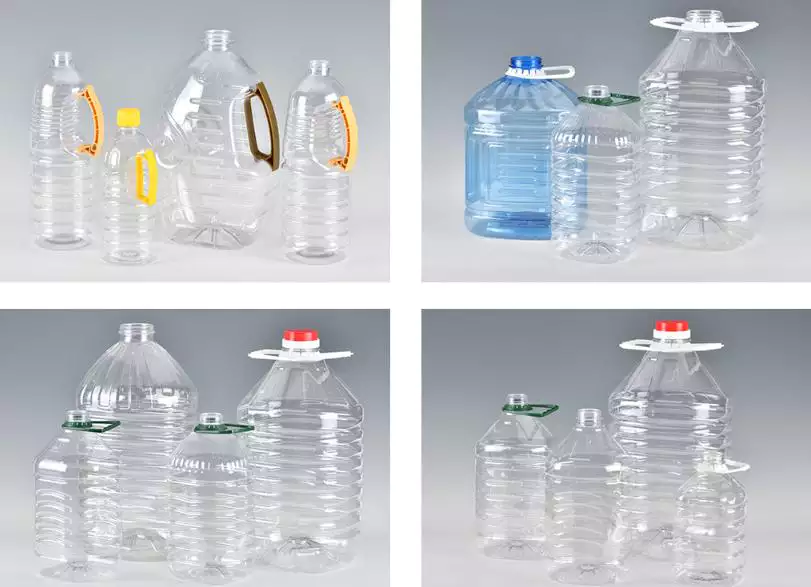
✔️ Package size range
List fill volumes, bottle weights, neck finishes and family shapes. Size the machine against the heaviest shot and largest mold envelope, then verify smaller formats remain practical.
✔️ Oil compatibility
Edible oils can interact with labels, closures and some polymer/additive systems over shelf life. Use the approved food-contact resin and run filled-package storage tests.
✔️ Grip geometry
Side grips, ribs or handle-like features create uneven local stretch. Use preform orientation and thermal control to feed material into high-strain corners.
A demanding shape case such as the wide-mouth container ISBM application is useful for checking whether the same process logic remains stable when projected area, heat balance, and material distribution become harder to control.
Define the Oil Package and Distribution Conditions
Package size range
Package size range. List fill volumes, bottle weights, neck finishes and family shapes. Size the machine against the heaviest shot and largest mold envelope, then verify smaller formats remain practical. Include package size range in the quotation and acceptance checklist so the requirement survives the purchasing process. The safest interpretation comes from comparing at least several stable cycles and then verifying package size range without changing the rest of the recipe. Selecting only for the flagship bottle can create poor economics on smaller SKUs.
Choose Resin and Bottle Geometry
Oil compatibility
Oil compatibility. Edible oils can interact with labels, closures and some polymer/additive systems over shelf life. Use the approved food-contact resin and run filled-package storage tests. Include oil compatibility in the quotation and acceptance checklist so the requirement survives the purchasing process. A useful production trial keeps the resin lot and cavity identification fixed while oil compatibility is changed, followed by a separate check of oil compatibility. A bottle that passes water tests can behave differently when filled with oil.
Check Grip, Handle and Panel Formability
Grip geometry
Grip geometry. Side grips, ribs or handle-like features create uneven local stretch. Use preform orientation and thermal control to feed material into high-strain corners. Include grip geometry in the quotation and acceptance checklist so the requirement survives the purchasing process. The practical value of this check is that it turns grip geometry from a vague setting into evidence that can be compared with grip geometry. A thin grip corner can crack during squeezing or transport.
Panel stiffness
Panel stiffness. Large flat panels can buckle under stacking, hot filling or cap application. Tune wall distribution and rib geometry and test top load or panel deformation under actual logistics conditions. Include panel stiffness in the quotation and acceptance checklist so the requirement survives the purchasing process. Use this result to narrow the process window, not to create a new universal setpoint; the next constraint to confirm is panel stiffness. Adding local wall thickness without redesign can increase cooling time and cost.
Working terms for this specific task
- Package size range
- List fill volumes, bottle weights, neck finishes and family shapes.
- Oil compatibility
- Edible oils can interact with labels, closures and some polymer/additive systems over shelf life.
- Grip geometry
- Side grips, ribs or handle-like features create uneven local stretch.
- Panel stiffness
- Large flat panels can buckle under stacking, hot filling or cap application.
Size the Machine for Bottle Weight and Cavitation
Neck and cap
Neck and cap. Oil bottles need reliable seal surfaces and torque to prevent leakage. Gauge neck finish, test closure application and inspect for stress or flash. Include neck and cap in the quotation and acceptance checklist so the requirement survives the purchasing process. The expected response should be visible in a bottle measurement, defect map, or machine trend before the team proceeds to neck and cap. A leak can originate at the injection-molded neck even when the body passes pressure tests.
| Item | Engineering question | Practical verification |
|---|---|---|
| Package size range | List fill volumes, bottle weights, neck finishes and family shapes. | Size the machine against the heaviest shot and largest mold envelope, then verify smaller formats remain practical. |
| Oil compatibility | Edible oils can interact with labels, closures and some polymer/additive systems over shelf life. | Use the approved food-contact resin and run filled-package storage tests. |
| Grip geometry | Side grips, ribs or handle-like features create uneven local stretch. | Use preform orientation and thermal control to feed material into high-strain corners. |
| Panel stiffness | Large flat panels can buckle under stacking, hot filling or cap application. | Tune wall distribution and rib geometry and test top load or panel deformation under actual logistics conditions. |
| Neck and cap | Oil bottles need reliable seal surfaces and torque to prevent leakage. | Gauge neck finish, test closure application and inspect for stress or flash. |
| Base stability | The bottle must stand reliably on filling and packing conveyors. | Check base flatness after full cooling and with oil fill weight. |
| Release condition | Use agreed bottle dimensions, wall map, leak, top-load or handling tests and stable output. If possible, include a downstream filling/capping trial before full-scale release. | |
Protect Closure and Seal Integrity
Base stability
Base stability. The bottle must stand reliably on filling and packing conveyors. Check base flatness after full cooling and with oil fill weight. Include base stability in the quotation and acceptance checklist so the requirement survives the purchasing process. Once this check is stable, the next useful question is whether base stability changes the same bottle region or affects a different part of the process. Residual heat in the base can cause rocking or creep after filling.
The ASB-12 injection tooling replacement is a useful equipment example when the task involves mold exchange, dimensional matching, cooling performance, or repeatable transfer between ISBM stations.

Plan for Oil-Compatible Downstream Handling
Mold and cavitation
Mold and cavitation. Bottle width, grip geometry and finish diameter determine realistic cavity pitch. Evaluate shot mass, cooling and simultaneous blow-air demand at each cavity count. Include mold and cavitation in the quotation and acceptance checklist so the requirement survives the purchasing process. This checkpoint should be evaluated before mold and cavitation is altered, because otherwise two process mechanisms change at the same time. High cavitation can overload cooling or air infrastructure.
Cleaning and product area
Cleaning and product area. Although molding occurs before filling, plant layout should avoid oil mist or spills contaminating bottle storage and machine access. Plan segregation, clean transfer and maintenance access. Include cleaning and product area in the quotation and acceptance checklist so the requirement survives the purchasing process. For this topic, the engineering log should connect cleaning and product area with the observed bottle condition and then test whether cleaning and product area supports the same diagnosis. Downstream oil contamination can make molded bottles look defective or attract dust.
Evaluate Output, Changeovers and Total Cost
Output planning
Output planning. Calculate good bottles per hour based on real cycle and SKU schedule. Include mold changes and maintenance when translating capacity into weekly supply. Include output planning in the quotation and acceptance checklist so the requirement survives the purchasing process. Do not judge this factor from the HMI value alone; pair it with the actual bottle result, then continue with output planning only after the relationship is clear. Theoretical speed does not guarantee the filling line will stay supplied.
Use an Acceptance Test with Filled-Package Criteria
Acceptance test
Acceptance test. Use agreed bottle dimensions, wall map, leak, top-load or handling tests and stable output. If possible, include a downstream filling/capping trial before full-scale release. Include acceptance test in the quotation and acceptance checklist so the requirement survives the purchasing process. Keep acceptance test at its validated baseline while this item is tested so the bottle response can be attributed to one cause. A machine trial that ignores the closure and filling system can miss package-level problems.
Output planning: release evidence
Calculate good bottles per hour based on real cycle and SKU schedule. Include mold changes and maintenance when translating capacity into weekly supply. The condition is accepted only when the relevant bottle measurement or functional test remains stable after the process reaches normal operating temperature.
Acceptance test: failure boundary
A machine trial that ignores the closure and filling system can miss package-level problems. Use that failure mode as the boundary for the trial and return to the previous stable condition when the bottle response moves in the wrong direction.
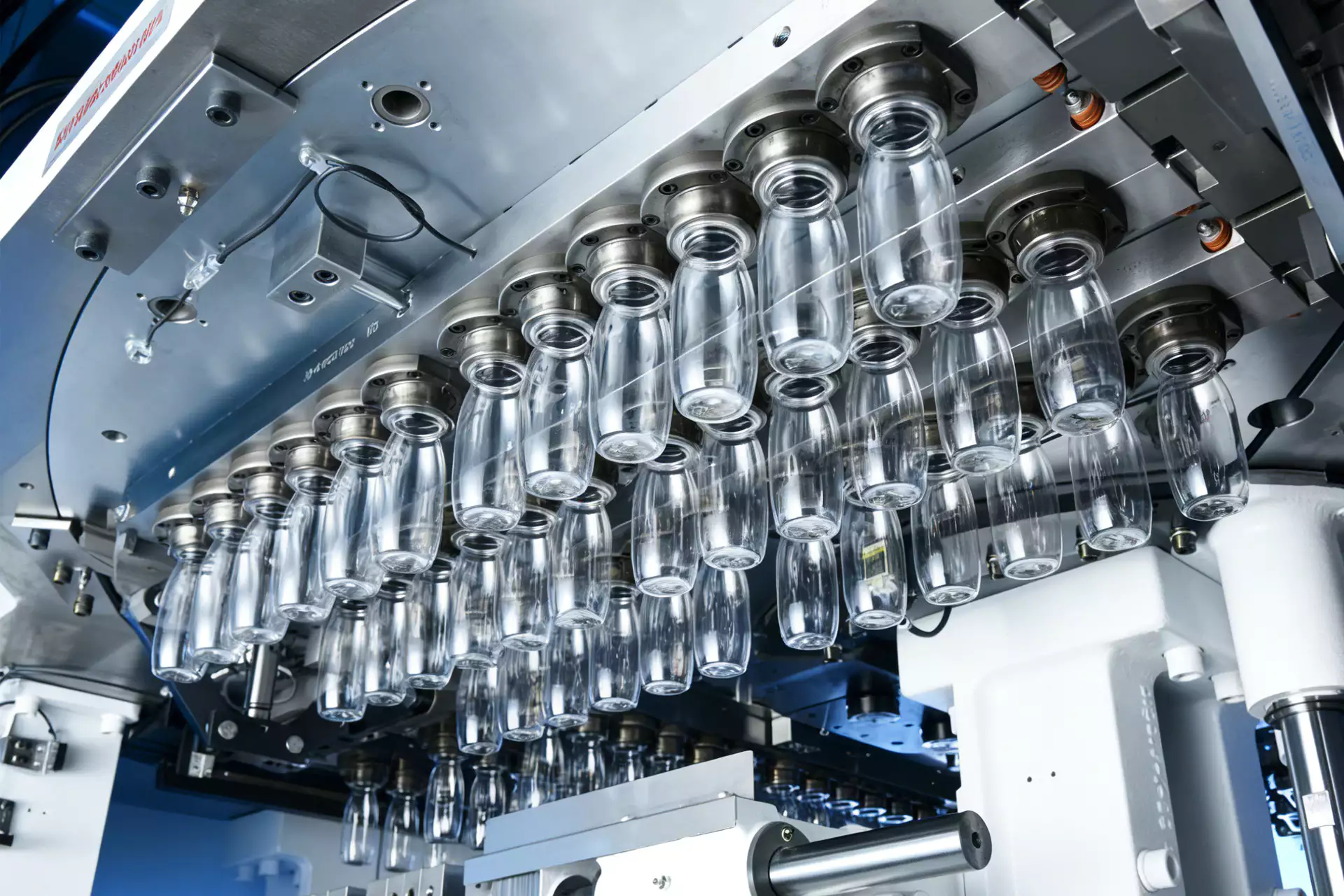
For this topic, the one-step ISBM machine portfolio provides useful equipment context for connecting the process requirement to an integrated resin-to-bottle platform.
Questions that arise specifically in ISBM Machines for Edible Oil Bottles: Buying Guide
What feature often makes edible-oil bottles difficult?
Grips, large panels, heavy fill loads and closure leak requirements can make material distribution and package testing demanding.
Should I select by bottle volume?
No. Bottle weight, width, neck, grip geometry, cavitation and output can be more important than nominal volume.
How do I prevent a thin grip area?
Use preform design, orientation, preferential thermal control where available, and coordinated stretch/blow timing, then verify thickness around the grip.
Why test with actual oil?
Product chemistry, fill weight and storage conditions can affect package performance differently than an empty-bottle test.
What should the machine acceptance test include?
Stable good output plus the bottle dimensions, wall distribution, leak, standing and handling criteria important to the finished package.
Practical conclusion
For ISBM Machines for Edible Oil Bottles: Buying Guide, begin by documenting package size range, then test base stability without moving unrelated settings, and release the process only after acceptance test is verified on every active cavity. A machine trial that ignores the closure and filling system can miss package-level problems.