
How to Reduce Scrap in ISBM Bottle Production: Practical Technical Guide
The useful answer to How to Reduce Scrap in ISBM Bottle Production comes from the interaction between scrap taxonomy, material contamination, and cost visibility. The sections below turn those factors into checks that can be repeated on a production machine.
Scrap taxonomyMaterial contaminationCost visibility
What this article must prove
Reduce isbm scrap by separating startup, injection, thermal, stretch-blow, mold, material, handling and quality-system losses and then preventing recurrence with cavity-level reaction plans. A defensible baseline begins with Create defect codes such as preform short/flash, haze, wall-thickness, base, neck, black spot, handling damage and startup purge. The first verification method is Record weight or bottle count plus cavity and time. From there, the article follows only checks that can materially change the answer promised by the title. Where an exact operating value depends on the resin grade, bottle drawing, mold, or delivered machine, the approved project specification controls the final setting.
✔️ Scrap taxonomy
Create defect codes such as preform short/flash, haze, wall-thickness, base, neck, black spot, handling damage and startup purge. Record weight or bottle count plus cavity and time.
✔️ Startup baseline
Use stored recipes, mold setup sheets, resin preparation and golden samples to shorten the path to first good bottle. Track first-good-part time after each changeover.
✔️ Preform rejects
Inspect preform mass, gate, neck and appearance before blowing. Stop the process and correct injection when the input is unstable.
Count Scrap by Cause, Not Just Total Kilograms
Scrap taxonomy
Scrap taxonomy. Create defect codes such as preform short/flash, haze, wall-thickness, base, neck, black spot, handling damage and startup purge. Record weight or bottle count plus cavity and time. Code scrap related to scrap taxonomy by cavity, time, and process stage so the corrective action targets the actual source of loss. Once this check is stable, the next useful question is whether scrap taxonomy changes the same bottle region or affects a different part of the process. A single scrap percentage cannot tell engineering what to fix.
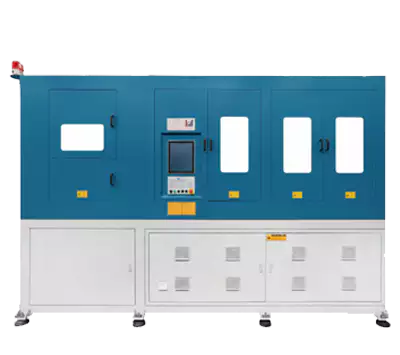
When translating the requirement into hardware, the HGY50-V3-EV machine configuration illustrates how injection, thermal conditioning, stretch-blow motion, and handling are organized on a compact one-step platform.
Reduce Startup Scrap with a Proven Baseline
Startup baseline
Startup baseline. Use stored recipes, mold setup sheets, resin preparation and golden samples to shorten the path to first good bottle. Track first-good-part time after each changeover. Code scrap related to startup baseline by cavity, time, and process stage so the corrective action targets the actual source of loss. This checkpoint should be evaluated before startup baseline is altered, because otherwise two process mechanisms change at the same time. Operators who rebuild settings from memory create avoidable startup scrap.
Eliminate Preform Defects before Blow Tuning
Preform rejects
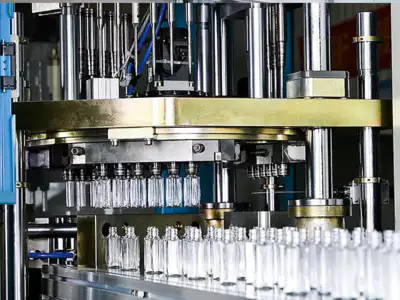
Preform rejects. Inspect preform mass, gate, neck and appearance before blowing. Stop the process and correct injection when the input is unstable. Code scrap related to preform rejects by cavity, time, and process stage so the corrective action targets the actual source of loss. For this topic, the engineering log should connect preform rejects with the observed bottle condition and then test whether preform rejects supports the same diagnosis. Continuing to blow bad preforms adds compressed-air and cooling cost to parts already destined for scrap.
Thermal drift
Thermal drift. Monitor cooling and conditioning conditions that shift wall distribution over time. Use temperature/thickness checks after utility or cycle changes. Code scrap related to thermal drift by cavity, time, and process stage so the corrective action targets the actual source of loss. Do not judge this factor from the HMI value alone; pair it with the actual bottle result, then continue with thermal drift only after the relationship is clear. A process can slowly drift into scrap without a machine alarm.
Working terms for this specific task
- Scrap taxonomy
- Create defect codes such as preform short/flash, haze, wall-thickness, base, neck, black spot, handling damage and startup purge.
- Startup baseline
- Use stored recipes, mold setup sheets, resin preparation and golden samples to shorten the path to first good bottle.
- Preform rejects
- Inspect preform mass, gate, neck and appearance before blowing.
- Thermal drift
- Monitor cooling and conditioning conditions that shift wall distribution over time.
Stabilize Thermal Conditioning
Cavity defects
Cavity defects. Track recurring defects by cavity and service local vents, cooling, rods, seals or hot-runner components. Compare one cavity against neighbors under the same recipe. Code scrap related to cavity defects by cavity, time, and process stage so the corrective action targets the actual source of loss. Keep cavity defects at its validated baseline while this item is tested so the bottle response can be attributed to one cause. Global recipe changes to fix one cavity can damage the other cavities.
| Item | Engineering question | Practical verification |
|---|---|---|
| Scrap taxonomy | Create defect codes such as preform short/flash, haze, wall-thickness, base, neck, black spot, handling damage and startup purge. | Record weight or bottle count plus cavity and time. |
| Startup baseline | Use stored recipes, mold setup sheets, resin preparation and golden samples to shorten the path to first good bottle. | Track first-good-part time after each changeover. |
| Preform rejects | Inspect preform mass, gate, neck and appearance before blowing. | Stop the process and correct injection when the input is unstable. |
| Thermal drift | Monitor cooling and conditioning conditions that shift wall distribution over time. | Use temperature/thickness checks after utility or cycle changes. |
| Cavity defects | Track recurring defects by cavity and service local vents, cooling, rods, seals or hot-runner components. | Compare one cavity against neighbors under the same recipe. |
| Material contamination | Control resin identity, drying, regrind/recycled content and color changes. | Use line-clearance and purge standards based on actual material transitions. |
| Release condition | Convert scrap into resin cost plus lost machine time, energy and downstream disruption. Prioritize high-cost defects, not just high counts. | |
Remove Stretch-Blow and Cavity Defects
Material contamination
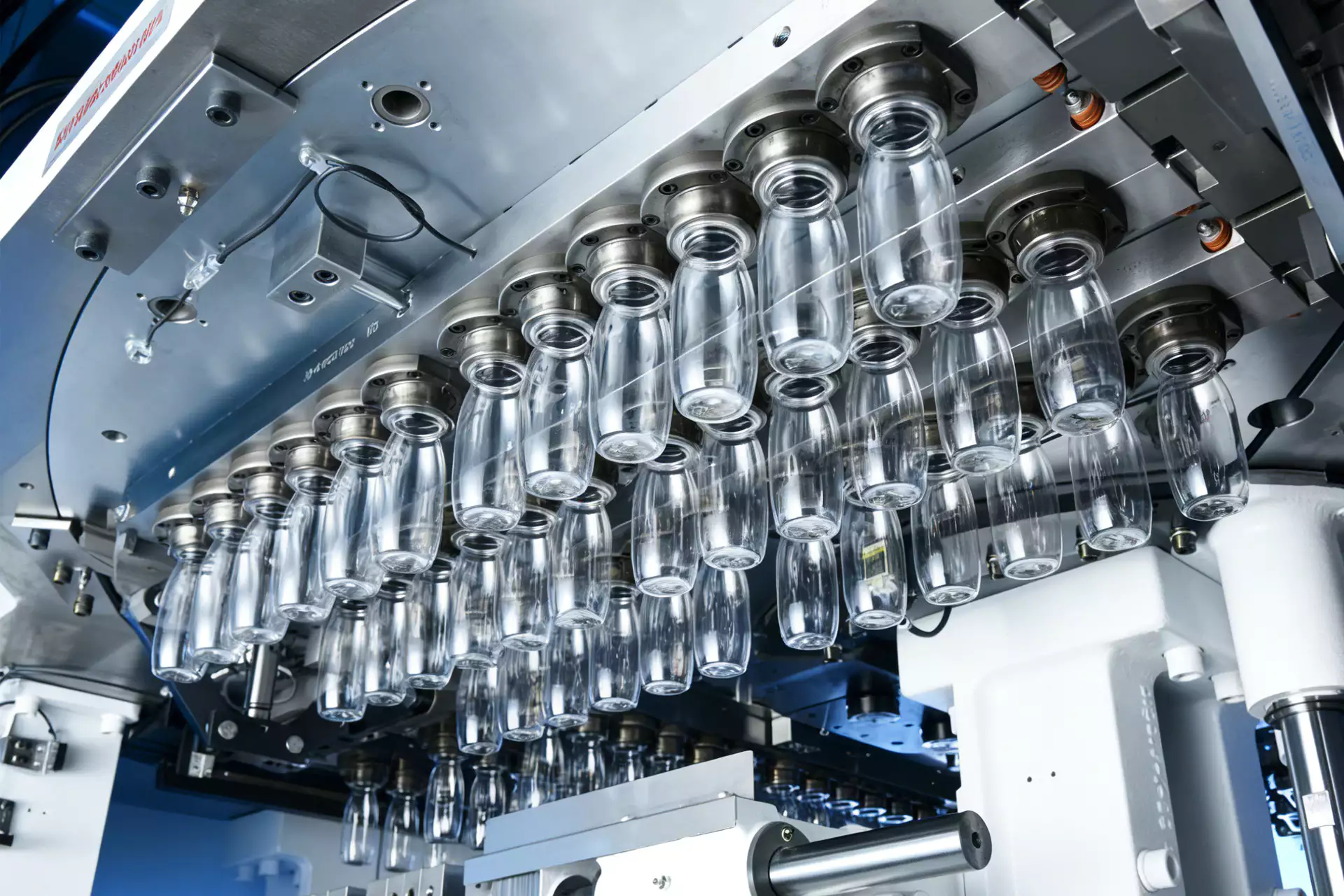
Material contamination. Control resin identity, drying, regrind/recycled content and color changes. Use line-clearance and purge standards based on actual material transitions. Code scrap related to material contamination by cavity, time, and process stage so the corrective action targets the actual source of loss. Use the smallest controlled change that can prove the effect of material contamination, then restore the baseline before a different adjustment such as material contamination is tried. Mixed resin creates scrap that may continue long after the changeover.
Control Material Changes and Contamination
Handling rejects
Handling rejects. Inspect take-out, conveyor guides, drops and accumulation for scratches or warm-bottle deformation. Check bottles immediately at ejection and downstream. Code scrap related to handling rejects by cavity, time, and process stage so the corrective action targets the actual source of loss. This factor belongs in the setup sheet because it directly changes the conditions under which handling rejects is evaluated. Molding technicians can misdiagnose damage created after the mold opens.
Regrind policy
Regrind policy. If scrap can be recycled internally, define approved collection, cleanliness, blend and material-property controls. Do not return contaminated or degraded parts without validation. Code scrap related to regrind policy by cavity, time, and process stage so the corrective action targets the actual source of loss. If the result differs by cavity, compare the local hardware related to regrind policy before moving on to regrind policy. Uncontrolled regrind can turn one scrap event into a recurring material problem.
O ASB-compatible tooling configuration is also relevant when checking how mold interfaces and machine motion must remain compatible during replacement, troubleshooting, or capacity changes.
Stop Downstream Handling Damage
Reaction plan
Reaction plan. For each top defect, define the first three checks and who owns the decision to stop or continue. Keep the plan at the machine and revise it after verified root causes. Code scrap related to reaction plan by cavity, time, and process stage so the corrective action targets the actual source of loss. This item is considered resolved only when the finding remains repeatable after thermal stabilization and the next check, reaction plan, does not contradict it. Random trial-and-error lengthens scrap events.
Use Cavity and Time Data to Prevent Recurrence
Cost visibility
Cost visibility. Convert scrap into resin cost plus lost machine time, energy and downstream disruption. Prioritize high-cost defects, not just high counts. Code scrap related to cost visibility by cavity, time, and process stage so the corrective action targets the actual source of loss. For repeatability, define who measures cost visibility, where it is measured, and what bottle evidence is required before checking cost visibility. A low-count heavy bottle reject can waste more resin than many tiny cosmetic rejects.
Reaction plan: release evidence
For each top defect, define the first three checks and who owns the decision to stop or continue. Keep the plan at the machine and revise it after verified root causes. The condition is accepted only when the relevant bottle measurement or functional test remains stable after the process reaches normal operating temperature.
Cost visibility: failure boundary
A low-count heavy bottle reject can waste more resin than many tiny cosmetic rejects. Use that failure mode as the boundary for the trial and return to the previous stable condition when the bottle response moves in the wrong direction.
Scrap metrics that show where resin is being lost
Scrap rate by count = rejected bottles / total bottles produced. Scrap rate by mass = rejected resin mass / total resin converted. Use both when the product mix contains very different bottle weights, because one heavy rejected jar can consume more resin than several tiny bottles.
Also calculate first-good-part time after changeover and cavity-specific reject rate. These measures separate startup loss from a chronic mold-cavity problem and make the corrective action much more specific.
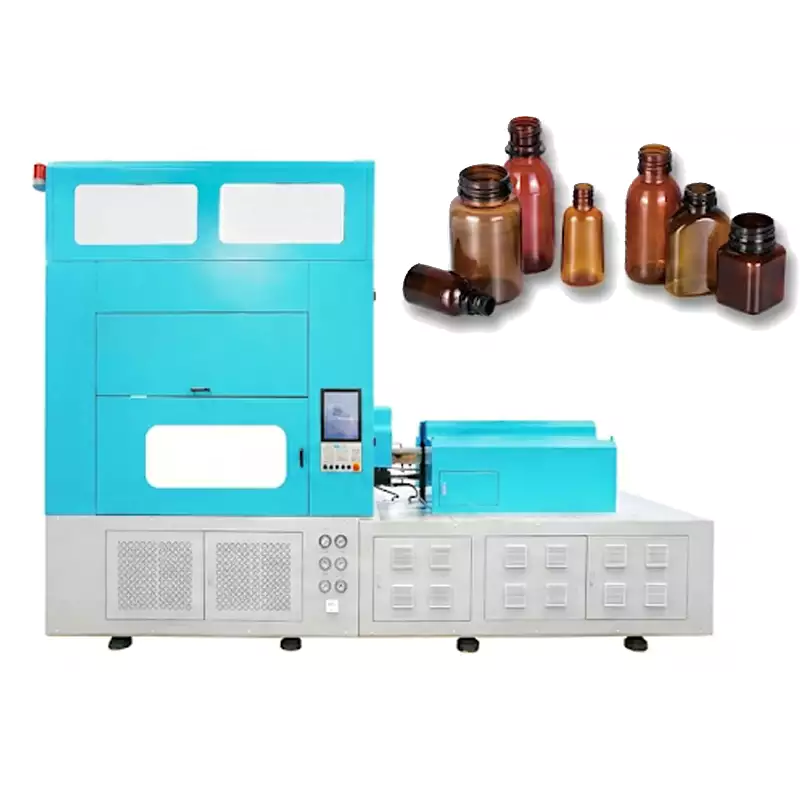
For this topic, the one-step ISBM machine portfolio provides useful equipment context for connecting the process requirement to an integrated resin-to-bottle platform.
Questions that arise specifically in How to Reduce Scrap in ISBM Bottle Production
What is the best way to start reducing scrap?
Classify it by defect, cavity, time and process stage so the largest verified cause becomes visible.
Why separate startup scrap?
Startup losses have different causes and countermeasures from defects that develop during stable running.
Should I tune the whole machine for one bad cavity?
Usually not. First inspect cavity-specific cooling, tooling, air valve, stretch rod and preform balance.
Can scrap be solved only by operator training?
Training helps, but recurring scrap often needs engineering action on tooling, utilities, material handling or maintenance.
What should a reaction plan contain?
The defect definition, immediate containment, first diagnostic checks, responsible role and criteria for resuming production.
Practical conclusion
A robust answer to How to Reduce Scrap in ISBM Bottle Production should survive a restart and a full thermal stabilization period. The setup record should therefore connect scrap taxonomy with material contamination and the bottle result from cost visibility. Mixed resin creates scrap that may continue long after the changeover.