
How Blow Pressure Affects ISBM Bottle Quality: Practical Technical Guide
This guide treats How Blow Pressure Affects ISBM Bottle Quality as a sequence of measurable decisions. It begins with the physical product requirement, then tests the process mechanisms that can change the bottle, and finishes with a release condition that can be documented.
Pre-blow timingBase formationStable-setting method
Что должна доказать эта статья
Understand how the timing, pressure rise and final blow pressure affect preform expansion, mold contact, detail reproduction, material distribution, air consumption and defect formation. A defensible baseline begins with Air introduced early can start radial expansion before the stretch rod has moved enough material axially. The first verification method is Observe how wall thickness shifts between shoulder and base when pre-blow timing changes in small increments. From there, the article follows only checks that can materially change the answer promised by the title. Where an exact operating value depends on the resin grade, bottle drawing, mold, or delivered machine, the approved project specification controls the final setting.
✔️ Pre-blow timing
Air introduced early can start radial expansion before the stretch rod has moved enough material axially. Observe how wall thickness shifts between shoulder and base when pre-blow timing changes in small increments.
✔️ Pre-blow level
A lower initial pressure may allow more controlled axial stretch before full mold contact, depending on machine design. Tune level together with rod speed and thermal profile rather than independently.
✔️ Pressure rise rate
Valve flow, passage size, receiver pressure and piping determine how quickly cavity pressure builds. Measure pressure at or near the machine during the blow event if the process is sensitive to rise time.
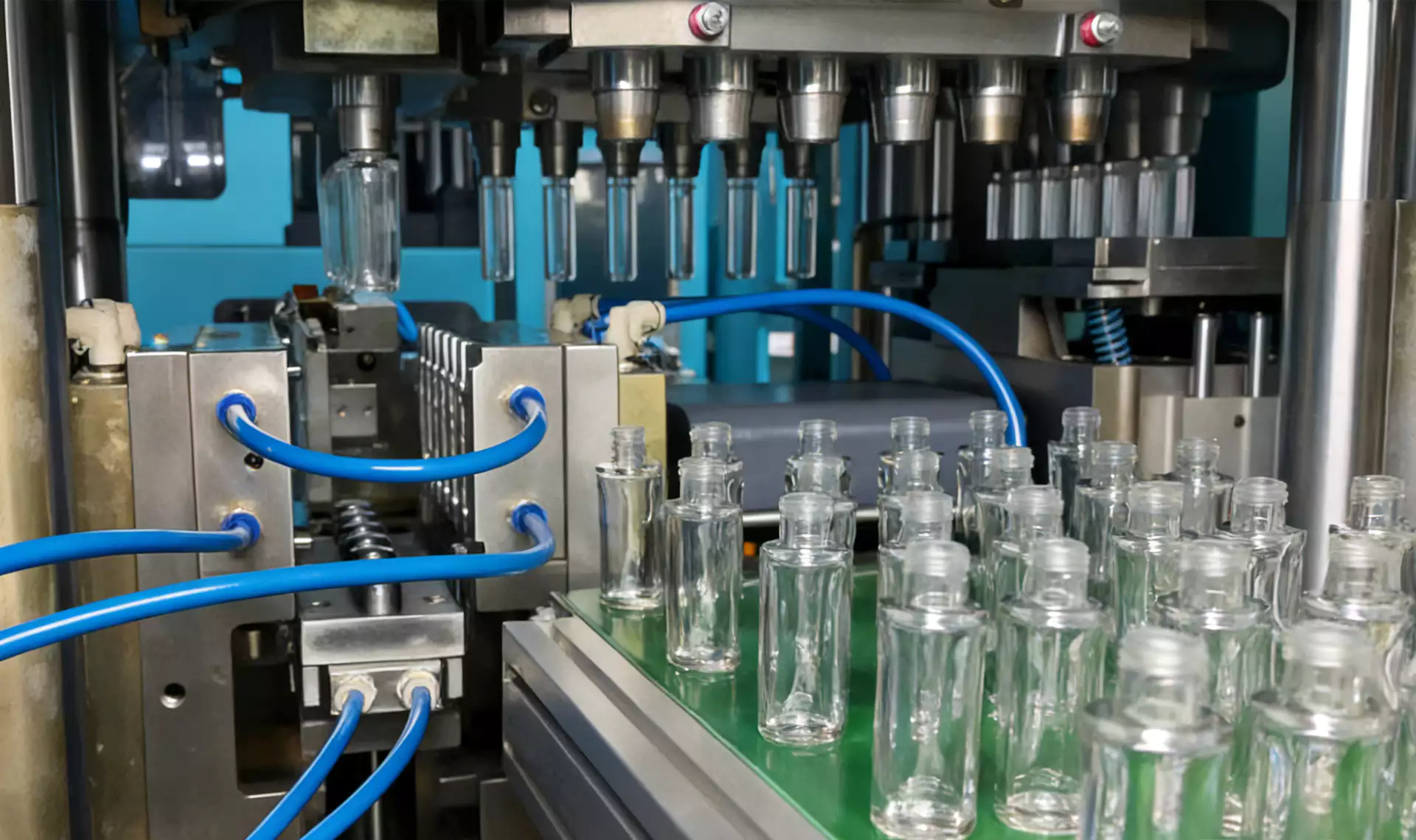
При преобразовании требований в аппаратное обеспечение, Конфигурация машины HGY50-V3-EV На рисунке показано, как организованы процессы впрыска, термообработки, выдувания и обработки на компактной одноэтапной платформе.
Separate Pressure from Blow Timing
Pre-blow timing
Pre-blow timing. Air introduced early can start radial expansion before the stretch rod has moved enough material axially. Observe how wall thickness shifts between shoulder and base when pre-blow timing changes in small increments. Observe when the effect of pre-blow timing first appears in the cycle; that timing helps separate cause from symptom. If a change improves one region but worsens another, compare the material or energy movement between pre-blow timing and pre-blow timing instead of accepting the first visual improvement. Too-early radial growth can lock material high in the bottle and thin the lower wall.
What Happens During Initial Expansion
Pre-blow level
Pre-blow level. A lower initial pressure may allow more controlled axial stretch before full mold contact, depending on machine design. Tune level together with rod speed and thermal profile rather than independently. Observe when the effect of pre-blow level first appears in the cycle; that timing helps separate cause from symptom. Where the outcome depends on material grade or tooling geometry, confirm the approved project limit and then use pre-blow level as the next cross-check. Too little pressure can allow the preform to fold or contact the rod; too much can dominate stretching.
Pressure rise rate
Pressure rise rate. Valve flow, passage size, receiver pressure and piping determine how quickly cavity pressure builds. Measure pressure at or near the machine during the blow event if the process is sensitive to rise time. Observe when the effect of pressure rise rate first appears in the cycle; that timing helps separate cause from symptom. When the project is near a machine or material limit, require a molding trial that isolates pressure rise rate and then challenges pressure rise rate under the same bottle specification. A central compressor gauge can look stable while local pressure collapses during a short high-flow pulse.
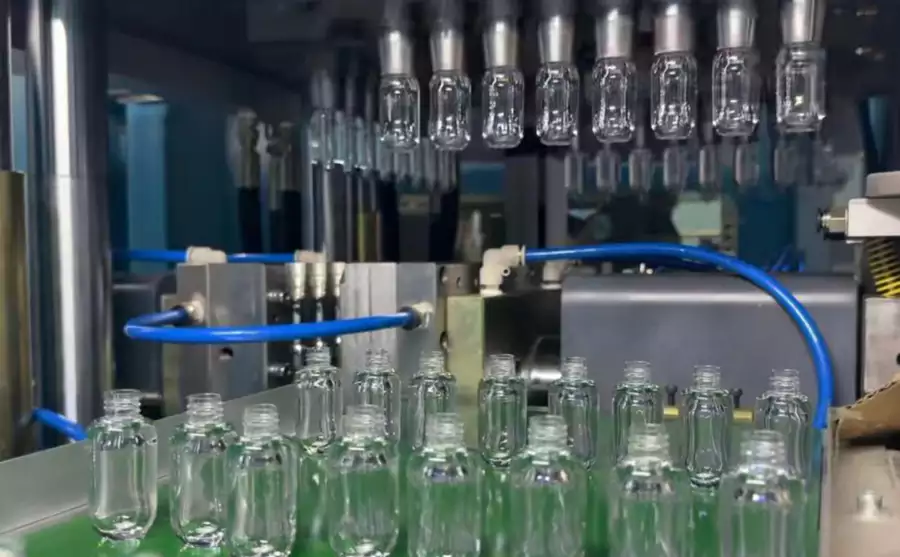
How Pressure Rise Changes Material Movement
Final pressure
Final pressure. Final blow pressure helps drive the polymer against cavity details and supports the bottle while it cools. Increase only until detail, dimensions and process stability are achieved for the specific resin and bottle. Observe when the effect of final pressure first appears in the cycle; that timing helps separate cause from symptom. The safest interpretation comes from comparing at least several stable cycles and then verifying final pressure without changing the rest of the recipe. Higher pressure beyond the useful point wastes compressed-air energy and can increase loads without improving quality.
Условия работы для выполнения данной конкретной задачи
- Pre-blow timing
- Air introduced early can start radial expansion before the stretch rod has moved enough material axially.
- Pre-blow level
- A lower initial pressure may allow more controlled axial stretch before full mold contact, depending on machine design.
- Pressure rise rate
- Valve flow, passage size, receiver pressure and piping determine how quickly cavity pressure builds.
- Final pressure
- Final blow pressure helps drive the polymer against cavity details and supports the bottle while it cools.
How Final Pressure Affects Mold Contact
Mold venting
Mold venting. Air trapped between polymer and cavity must escape as the bottle expands. Keep vents and parting-line paths clean and verify that poor detail is not caused by blocked venting. Observe when the effect of mold venting first appears in the cycle; that timing helps separate cause from symptom. A useful production trial keeps the resin lot and cavity identification fixed while mold venting is changed, followed by a separate check of mold venting. Raising blow pressure against trapped air can hide the real cause and may worsen local defects.
Base formation
Base formation. The base often needs coordinated rod position, preform temperature and blow timing to distribute material into feet, push-up or heel geometry. Cut bottles and compare base thickness after pressure changes. Observe when the effect of base formation first appears in the cycle; that timing helps separate cause from symptom. The practical value of this check is that it turns base formation from a vague setting into evidence that can be compared with base formation. Pressure can reproduce geometry but cannot replace material that was already consumed in the sidewall.
Он ISBM replacement mold design reinforces the practical need to control mounting geometry, thermal behavior, transfer position, and cavity alignment rather than treating the mold as an isolated component.
| Элемент | инженерный вопрос | Практическая проверка |
|---|---|---|
| Pre-blow timing | Air introduced early can start radial expansion before the stretch rod has moved enough material axially. | Observe how wall thickness shifts between shoulder and base when pre-blow timing changes in small increments. |
| Pre-blow level | A lower initial pressure may allow more controlled axial stretch before full mold contact, depending on machine design. | Tune level together with rod speed and thermal profile rather than independently. |
| Pressure rise rate | Valve flow, passage size, receiver pressure and piping determine how quickly cavity pressure builds. | Measure pressure at or near the machine during the blow event if the process is sensitive to rise time. |
| Final pressure | Final blow pressure helps drive the polymer against cavity details and supports the bottle while it cools. | Increase only until detail, dimensions and process stability are achieved for the specific resin and bottle. |
| Mold venting | Air trapped between polymer and cavity must escape as the bottle expands. | Keep vents and parting-line paths clean and verify that poor detail is not caused by blocked venting. |
| Base formation | The base often needs coordinated rod position, preform temperature and blow timing to distribute material into feet, push-up or heel geometry. | Cut bottles and compare base thickness after pressure changes. |
| Условия выпуска | Establish a good thermal and stretch baseline, then tune air timing and pressure with thickness, dimensions and visual criteria. Use the lowest repeatable setting that passes the defined bottle tests with process margin. | |
When More Pressure Stops Helping
Panel definition
Panel definition. Sharp corners, ribs and embossing need sufficient material temperature and cavity contact. Compare definition with wall thickness and venting before changing final pressure. Observe when the effect of panel definition first appears in the cycle; that timing helps separate cause from symptom. Use this result to narrow the process window, not to create a new universal setpoint; the next constraint to confirm is panel definition. A cold preform can resist detail even at higher pressure.

Diagnose Quality Problems Before Raising Pressure
Air consumption
Air consumption. Compressed-air demand rises with bottle volume, pressure, cavitation and losses in the circuit. Track actual air use per good bottle and inspect for unnecessary pressure margin or exhaust losses. Observe when the effect of air consumption first appears in the cycle; that timing helps separate cause from symptom. The expected response should be visible in a bottle measurement, defect map, or machine trend before the team proceeds to air consumption. Pressure set higher than necessary becomes a recurring energy cost on every cycle.
Leakage and valve condition
Leakage and valve condition. Worn seals, blow valves or fittings can reduce effective cavity pressure. Pressure-test circuits and compare cavities when one location consistently underforms. Observe when the effect of leakage and valve condition first appears in the cycle; that timing helps separate cause from symptom. Once this check is stable, the next useful question is whether leakage and valve condition changes the same bottle region or affects a different part of the process. Increasing supply pressure to compensate for a leak masks maintenance work and raises plant demand.
Set the Lowest Stable Pressure that Meets the Bottle Requirement
Stable-setting method
Stable-setting method. Establish a good thermal and stretch baseline, then tune air timing and pressure with thickness, dimensions and visual criteria. Use the lowest repeatable setting that passes the defined bottle tests with process margin. Observe when the effect of stable-setting method first appears in the cycle; that timing helps separate cause from symptom. This checkpoint should be evaluated before stable-setting method is altered, because otherwise two process mechanisms change at the same time. Copying pressure from another mold ignores bottle volume, geometry, material and machine flow path.
Leakage and valve condition: release evidence
Worn seals, blow valves or fittings can reduce effective cavity pressure. Pressure-test circuits and compare cavities when one location consistently underforms. The condition is accepted only when the relevant bottle measurement or functional test remains stable after the process reaches normal operating temperature.
Stable-setting method: failure boundary
Copying pressure from another mold ignores bottle volume, geometry, material and machine flow path. Use that failure mode as the boundary for the trial and return to the previous stable condition when the bottle response moves in the wrong direction.
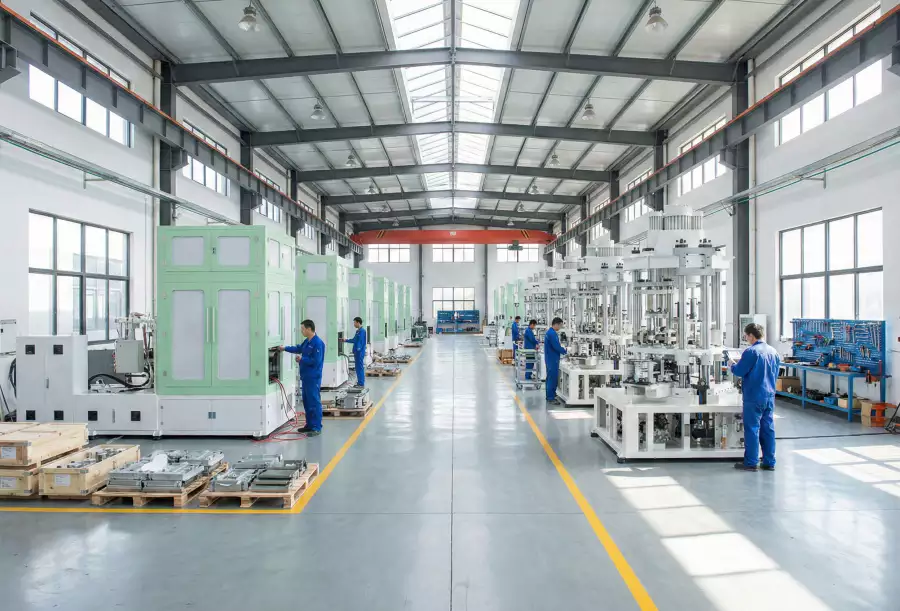
For this topic, the one-step ISBM machine portfolio provides useful equipment context for connecting the process requirement to an integrated resin-to-bottle platform.
Questions that arise specifically in How Blow Pressure Affects ISBM Bottle Quality
Does higher blow pressure always improve bottle definition?
No. After sufficient mold contact is achieved, more pressure may add energy cost without fixing defects caused by temperature, venting or material distribution.
What is more important, pressure or timing?
They interact. The pressure applied at each stage and the moment it is applied relative to stretch-rod motion both affect material movement.
Why does one cavity under-blow at the same set pressure?
Check cavity-specific valves, seals, passages, venting, preform temperature and mechanical alignment. The controller setpoint does not guarantee identical local pressure.
Can low pressure cause uneven wall thickness?
It can contribute, but uneven thickness often begins with preform design, thermal profile or stretch timing. Diagnose the material path before changing pressure.
How should I reduce compressed-air cost?
First establish the minimum pressure and timing that reliably meet bottle requirements, then address leaks, pressure drops, recovery or air-recycling options available on the system.
Практическое заключение
For How Blow Pressure Affects ISBM Bottle Quality, begin by documenting pre-blow timing, then test base formation without moving unrelated settings, and release the process only after stable-setting method is verified on every active cavity. Copying pressure from another mold ignores bottle volume, geometry, material and machine flow path.