
How to Reduce Compressed Air Cost in ISBM: Practical Technical Guide
This guide treats How to Reduce Compressed Air Cost in ISBM as a sequence of measurable decisions. It begins with the physical product requirement, then tests the process mechanisms that can change the bottle, and finishes with a release condition that can be documented.
Air baselineValve flowKPI
What this article must prove
Reduce compressed-air cost by lowering unnecessary pressure, eliminating leaks and restrictions, stabilizing the blow pulse, improving storage and recovery, and measuring air use per good bottle. A defensible baseline begins with Measure or estimate high-pressure air volume and compressor energy during stable ISBM production. The first verification method is Record bottle volume, cavities, cycle, pressure and yield. From there, the article follows only checks that can materially change the answer promised by the title. Where an exact operating value depends on the resin grade, bottle drawing, mold, or delivered machine, the approved project specification controls the final setting.
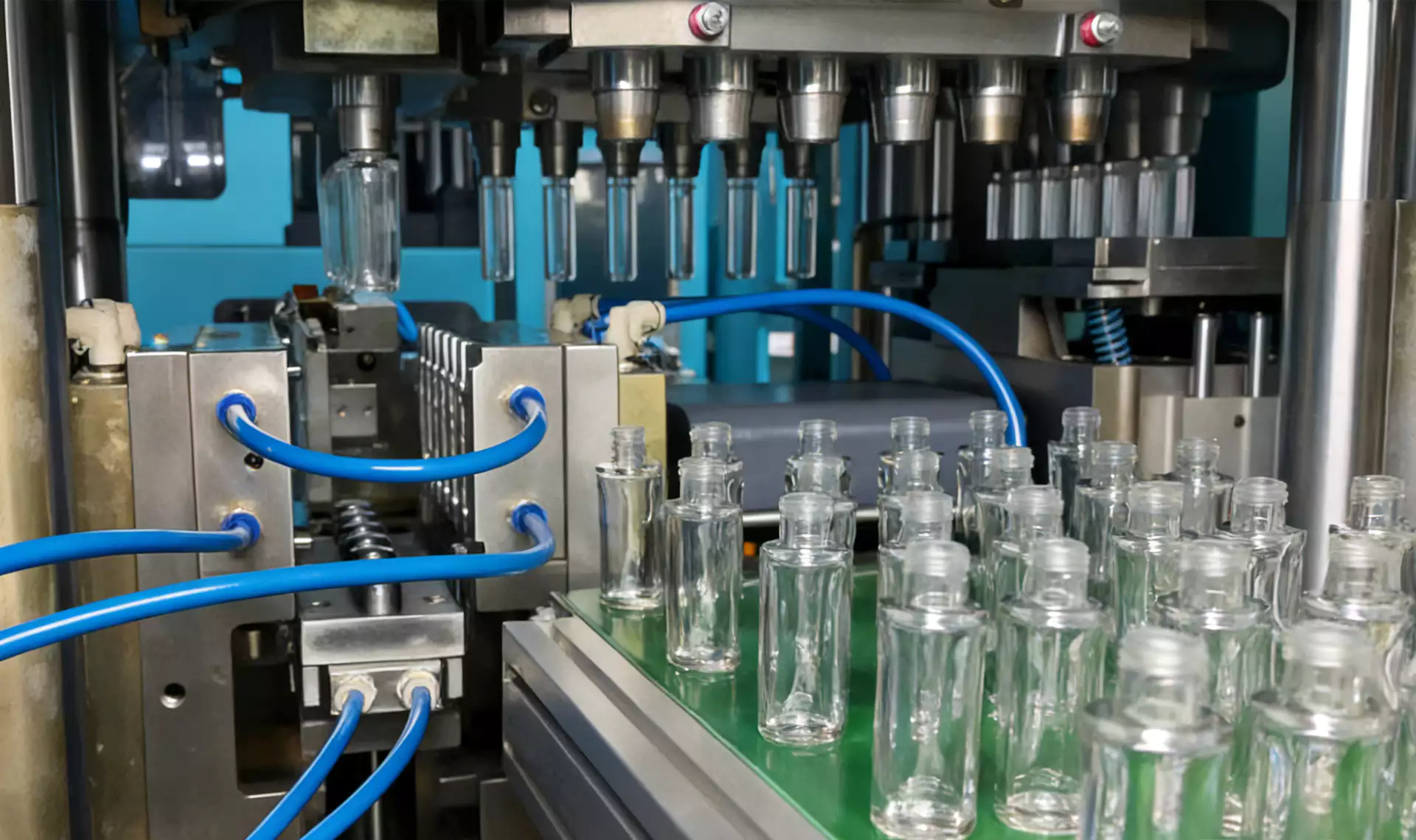
✔️ Air baseline
Measure or estimate high-pressure air volume and compressor energy during stable ISBM production. Record bottle volume, cavities, cycle, pressure and yield.
✔️ Minimum pressure
Reduce final blow pressure in controlled steps until bottle detail, dimensions or stability approach the lower process limit, then restore safe margin. Keep temperature and stretch settings fixed during the trial.
✔️ Pressure drop
Compare compressor/booster discharge with machine inlet during the blow pulse. Inspect filters, dryers, valves, piping and hose diameter when the drop is excessive.
Measure Air Use Where the Process Consumes It
Air baseline
Air baseline. Measure or estimate high-pressure air volume and compressor energy during stable ISBM production. Record bottle volume, cavities, cycle, pressure and yield. Evaluate air baseline as energy or cost per good bottle so a change that raises scrap is not mistaken for an efficiency gain. A useful production trial keeps the resin lot and cavity identification fixed while air baseline is changed, followed by a separate check of air baseline. Air consumption per hour is hard to compare when production rate changes.
For this topic, the one-step ISBM machine portfolio provides useful equipment context for connecting the process requirement to an integrated resin-to-bottle platform.
Find the Minimum Stable Blow Pressure
Minimum pressure
Minimum pressure. Reduce final blow pressure in controlled steps until bottle detail, dimensions or stability approach the lower process limit, then restore safe margin. Keep temperature and stretch settings fixed during the trial. Evaluate minimum pressure as energy or cost per good bottle so a change that raises scrap is not mistaken for an efficiency gain. The practical value of this check is that it turns minimum pressure from a vague setting into evidence that can be compared with minimum pressure. A universal pressure target ignores bottle geometry, resin and machine flow path.
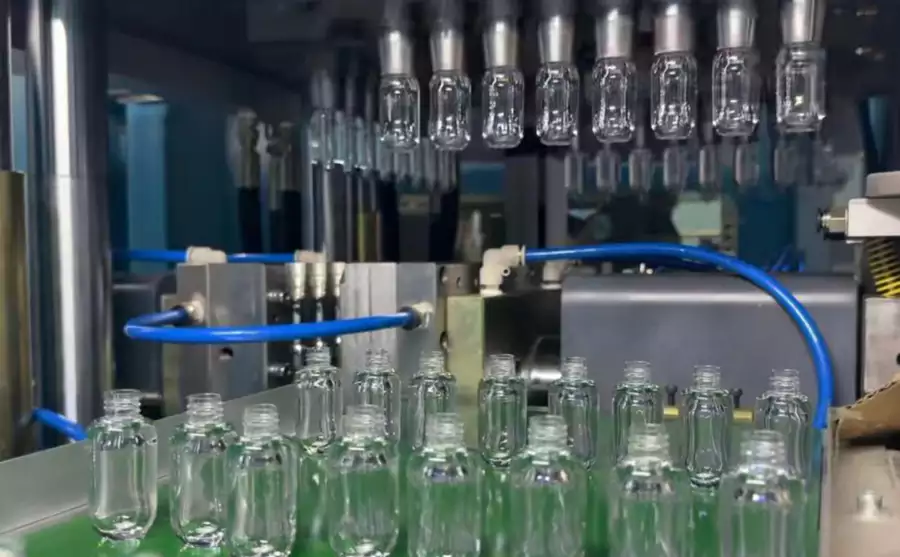
Fix Dynamic Pressure Drop before Raising Setpoints
Pressure drop
Pressure drop. Compare compressor/booster discharge with machine inlet during the blow pulse. Inspect filters, dryers, valves, piping and hose diameter when the drop is excessive. Evaluate pressure drop as energy or cost per good bottle so a change that raises scrap is not mistaken for an efficiency gain. Use this result to narrow the process window, not to create a new universal setpoint; the next constraint to confirm is pressure drop. Raising compressor pressure to compensate for a restriction increases artificial demand.
Leaks
Leaks. Survey joints, hoses, valves, neck seals and blow cores during safe maintenance. Prioritize by measured leak rate and repair difficulty. Evaluate leaks as energy or cost per good bottle so a change that raises scrap is not mistaken for an efficiency gain. The expected response should be visible in a bottle measurement, defect map, or machine trend before the team proceeds to leaks. Small high-pressure leaks can be expensive even if the machine still molds acceptable bottles.
Working terms for this specific task
- Air baseline
- Measure or estimate high-pressure air volume and compressor energy during stable ISBM production.
- Minimum pressure
- Reduce final blow pressure in controlled steps until bottle detail, dimensions or stability approach the lower process limit, then restore safe margin.
- Pressure drop
- Compare compressor/booster discharge with machine inlet during the blow pulse.
- Leaks
- Survey joints, hoses, valves, neck seals and blow cores during safe maintenance.
Repair Leaks and Worn Seals
Receiver sizing
Receiver sizing. Use local storage and control to buffer short high-flow events when appropriate. Evaluate pressure swing and recovery between cycles. Evaluate receiver sizing as energy or cost per good bottle so a change that raises scrap is not mistaken for an efficiency gain. Once this check is stable, the next useful question is whether receiver sizing changes the same bottle region or affects a different part of the process. Oversized or poorly controlled storage can add cost without fixing a valve or piping restriction.
| Artículo | Engineering question | Practical verification |
|---|---|---|
| Air baseline | Measure or estimate high-pressure air volume and compressor energy during stable ISBM production. | Record bottle volume, cavities, cycle, pressure and yield. |
| Minimum pressure | Reduce final blow pressure in controlled steps until bottle detail, dimensions or stability approach the lower process limit, then restore safe margin. | Keep temperature and stretch settings fixed during the trial. |
| Pressure drop | Compare compressor/booster discharge with machine inlet during the blow pulse. | Inspect filters, dryers, valves, piping and hose diameter when the drop is excessive. |
| Leaks | Survey joints, hoses, valves, neck seals and blow cores during safe maintenance. | Prioritize by measured leak rate and repair difficulty. |
| Receiver sizing | Use local storage and control to buffer short high-flow events when appropriate. | Evaluate pressure swing and recovery between cycles. |
| Valve flow | Maintain blow valves and passages so the cavity reaches pressure quickly without an excessive supply setpoint. | Compare cavity pressure response and bottle quality by cavity. |
| Release condition | Track high-pressure air energy or cost per good bottle and leak repair savings. Normalize by bottle size and product family where necessary. | |
Optimize Receivers and Local Storage
Valve flow
Valve flow. Maintain blow valves and passages so the cavity reaches pressure quickly without an excessive supply setpoint. Compare cavity pressure response and bottle quality by cavity. Evaluate valve flow as energy or cost per good bottle so a change that raises scrap is not mistaken for an efficiency gain. This checkpoint should be evaluated before valve flow is altered, because otherwise two process mechanisms change at the same time. A sluggish valve makes operators increase plant pressure for every cavity.

Use Air Recovery Where the Machine Supports It
Air recovery
Air recovery. Some machines can reuse high-pressure exhaust for lower-pressure functions or later blow stages. Verify recovery valve timing and actual compressor load reduction. Evaluate air recovery as energy or cost per good bottle so a change that raises scrap is not mistaken for an efficiency gain. For this topic, the engineering log should connect air recovery with the observed bottle condition and then test whether air recovery supports the same diagnosis. A disabled or leaking recovery system may silently lose its expected benefit.
Compressor controls
Compressor controls. Coordinate multiple compressors or boosters to avoid running several machines unloaded or at excessive pressure. Use plant demand profiles rather than independent local setpoints. Evaluate compressor controls as energy or cost per good bottle so a change that raises scrap is not mistaken for an efficiency gain. Do not judge this factor from the HMI value alone; pair it with the actual bottle result, then continue with compressor controls only after the relationship is clear. Poor sequencing can waste energy even after machine leaks are fixed.
El multi-material ISBM platform overview also helps frame how machine architecture, materials, utilities, and bottle applications fit together at line level.
Coordinate Compressor and Booster Controls
Quality boundary
Quality boundary. Do not sacrifice bottle definition, wall stability or cycle reliability for an arbitrary air-saving target. Use quality tests as the lower pressure constraint. Evaluate quality boundary as energy or cost per good bottle so a change that raises scrap is not mistaken for an efficiency gain. Keep quality boundary at its validated baseline while this item is tested so the bottle response can be attributed to one cause. Under-blown bottles generate scrap, which wastes resin and all energy already used upstream.
Track Compressed-Air Cost per Good Bottle
KPI
KPI. Track high-pressure air energy or cost per good bottle and leak repair savings. Normalize by bottle size and product family where necessary. Evaluate kpi as energy or cost per good bottle so a change that raises scrap is not mistaken for an efficiency gain. Use the smallest controlled change that can prove the effect of kpi, then restore the baseline before a different adjustment such as kpi is tried. Plant pressure alone is not an efficiency KPI.
Quality boundary: release evidence
Do not sacrifice bottle definition, wall stability or cycle reliability for an arbitrary air-saving target. Use quality tests as the lower pressure constraint. The condition is accepted only when the relevant bottle measurement or functional test remains stable after the process reaches normal operating temperature.
KPI: failure boundary
Plant pressure alone is not an efficiency KPI. Use that failure mode as the boundary for the trial and return to the previous stable condition when the bottle response moves in the wrong direction.
Compressed-air cost calculation
Compressed-air cost per good bottle = allocated compressor and booster energy cost / good bottles produced. If flow is measured, also track air volume per good bottle at the defined pressure condition. The plant should use its own compressor efficiency, electricity tariff, leakage, and operating-pressure data rather than a generic industry cost.
After a pressure, leak, or recovery project, compare the same bottle at the same good-output requirement. A reduction in supply pressure is valuable only when cavity pressure, bottle quality, and cycle remain stable.
When translating the requirement into hardware, the HGY50-V3-EV machine configuration illustrates how injection, thermal conditioning, stretch-blow motion, and handling are organized on a compact one-step platform.
Questions that arise specifically in How to Reduce Compressed Air Cost in ISBM
Why does high-pressure air cost so much?
Compressing air to blow-molding pressure requires substantial electrical energy, and leaks or excess pressure magnify the loss.
Can I reduce pressure on every bottle recipe?
No. Establish the minimum stable pressure separately for each bottle and process window.
What if machine pressure drops only during blowing?
Investigate dynamic restrictions, valve flow, receiver capacity and simultaneous plant demand rather than only the compressor setpoint.
Is air recovery always available?
No. It depends on machine design and installed options. Verify what your specific system can recover and how it is controlled.
What KPI should maintenance see?
Leak rate, dynamic pressure drop, air consumption and compressed-air cost per good bottle help connect maintenance work with production economics.
Practical conclusion
For How to Reduce Compressed Air Cost in ISBM, begin by documenting air baseline, then test valve flow without moving unrelated settings, and release the process only after kpi is verified on every active cavity. Plant pressure alone is not an efficiency KPI.