
Сипаттама
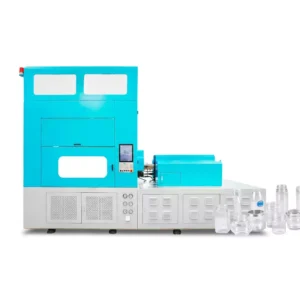
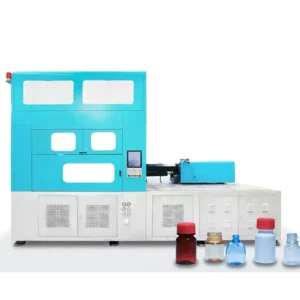
Blow Molding Mold for ASB-12 Machine Direct Drop-In Replacement Injection
Engineered for Uncompromising Precision, Seamless ASB Compatibility, 15% Faster Cycle Times, and Substantial Cost Reductions.
Maximize your production capabilities with industry-leading ISBM tooling designed for the modern manufacturing era.
Core Technology Quick Read
1:1 Dimensional Precision
CNC machined to tolerances tighter than 0.005mm. Guarantees absolute plug-and-play installation on your ASB-12 platform without machine modifications.
Metallurgical Superiority
Constructed from authentic ASSAB S136 ESR stainless steel, vacuum hardened to HRC 52-54 for ultimate corrosion resistance against PVC, PET, and rPET off-gassing.
Cycle Time Reduction
Advanced conformal cooling loop geometry increases thermodynamic heat transfer, slashing overall cycle times by 10% to 15% depending on wall thickness.
Capex Optimization
Achieve OEM-tier performance and longevity while saving 30% to 45% compared to original factory tooling. Drastically shorter lead times prevent costly downtime.
Engineering Challenges: Addressing the Bottlenecks of Legacy ASB Tooling
For production managers and process engineers operating single-stage Injection Stretch Blow Molding (ISBM) machines, specifically the legendary ASB-12 series, maintaining peak operational efficiency is a constant battle against physical wear and economic constraints. The OEM tooling, while historically reliable, presents significant modern-day challenges that our highly engineered ASB mold replacement directly solves.
The Escalating Cost of Original Equipment Spares
OEM pricing models for replacement molds and spare components (like neck rings, injection cavities, and stretch rods) have outpaced standard inflation. The financial burden of purchasing an original mold can severely skew the Return on Investment (ROI) of a new product launch. Our precision tooling eliminates this barrier, offering a direct structural and functional equivalent without the exorbitant brand premium.
Supply Chain Disruptions and Lead Time Paralysis
In the fast-moving consumer goods (FMCG), cosmetics, and pharmaceutical packaging sectors, waiting 20 to 24 weeks for an OEM mold is no longer viable. Such extended lead times result in lost market opportunities and production bottlenecks. By utilizing agile manufacturing protocols and localized premium steel sourcing, we compress lead times by up to 50%, ensuring your ASB-12 is operational and generating revenue months ahead of OEM schedules.
The Transition to rPET and Sustainable Polymers
Modern environmental mandates require higher inclusion rates of recycled PET (rPET). Older OEM mold designs were engineered for virgin PET, which has a wider processing window and different flow dynamics. When running 50% to 100% rPET, legacy molds often suffer from short shots, hazy preforms, and increased gate crystallinity due to suboptimal hot runner temperature control and inadequate cavity venting. Our upgraded tooling geometries are specifically calibrated for the rheological behavior of high-viscosity rPET.
Obsolescence of Specific Mold Series
As machine manufacturers push newer equipment, legacy models like the ASB-12 face forced obsolescence regarding tooling support. Procuring replacement parts for older iterations becomes an agonizing scavenger hunt. We reverse-engineer and optimize these precise configurations, guaranteeing lifetime support for your existing asset base without forcing you into multi-million dollar machinery upgrades.
Precision Solution: An Engineering Deep Dive into Our ASB-12 Tooling
Creating a mold that not only matches but surpasses OEM standards requires a multidimensional approach to mechanical design, thermodynamics, and metallurgy. Every single component—from the injection core to the blow mold cavity—is subjected to rigorous finite element analysis (FEA) and mold flow simulation before a single block of steel is cut.
1. Absolute Dimensional Perfection: The CNC Advantage
The 1-step ISBM process on an ASB-12 machine is highly intolerant of dimensional deviations. The preform must transition flawlessly from the injection station to the conditioning station, and finally to the stretch-blow station. Any misalignment caused by thermal expansion or machining inaccuracies leads to preform scuffing, uneven wall distribution, or catastrophic mold crashes.
- Tolerance Control: We utilize 5-axis Mazak and Makino CNC machining centers, maintaining tolerances of strictly less than 0.005mm across all mating surfaces.
- Stack Up Analysis: Comprehensive tolerance stack-up analysis ensures that the injection core, neck ring, and cavity insert maintain perfect concentricity under the immense clamping tonnage of the ASB-12.
- Interchangeability: All cavity components are 100% interchangeable. If a single cavity is damaged due to operator error, a replacement insert can be dropped in without requiring tedious manual bench-fitting or shimming.
2. Metallurgy and Extreme Durability
The choice of tool steel dictates the lifecycle and maintenance intervals of the mold. In the injection molding of PET, outgassing can create corrosive byproducts that pit and degrade inferior metals. This leads to hazy preforms and frequent polishing requirements.
- Premium Core & Cavity Steel: We exclusively source ASSAB S136 Electro-Slag Remelted (ESR) stainless steel from Sweden for our injection cavities, cores, and neck rings. The ESR process removes non-metallic inclusions, resulting in an exceptionally pure microstructure that allows for a flawless SPI A1 optical mirror polish.
- Vacuum Heat Treatment: The S136 components undergo a precise vacuum hardening and multiple tempering process to achieve a uniform hardness of HRC 52-54. This specific hardness provides the perfect balance: hard enough to resist wear and deformation over millions of cycles, yet tough enough to prevent brittle fracture under high injection pressures.
- Blow Mold Components: For the blow mold halves, where optical clarity is paramount and wear is lower, we typically utilize ALUMEC 89 high-strength aluminum or P20/718H pre-hardened steel, depending on the bottle geometry and required production volume. This optimizes weight and thermal conductivity.
- Surface Treatments: Optional Titanium Nitride (TiN) or specialized Teflon matrix coatings can be applied to thread splits and base push-ups to drastically reduce friction, allowing for lower ejection forces and minimizing thread damage.
3. Advanced Thermodynamics: Slashing Cycle Times
In the ISBM world, cycle time is the primary driver of profitability. The longest phase of the injection cycle is cooling. The faster you can extract heat from the molten PET (which enters the mold at approximately 280°C) and bring it down to its optimal stretch-blow conditioning temperature (around 100°C), the faster your machine can run.
- Turbulent Flow Engineering: Our cooling channels are not just drilled holes. We engineer the channel diameters and layout to ensure the chilled water achieves a Reynolds number well above 4000. This guarantees turbulent flow, which breaks the thermal boundary layer against the channel wall and maximizes the heat transfer coefficient.
- Conformal Cooling: For complex preform designs (e.g., wide mouth jars, thick-walled cosmetics), we utilize 3D metal printing (DMLS) to create conformal cooling channels. These channels follow the exact contour of the preform, providing uniform cooling that prevents core shift, reduces internal stress, and eliminates acetaldehyde (AA) generation hotspots.
- Beryllium Copper Inserts: In critical areas where heat pooling is severe (such as the injection gate area and thick neck finishes), we integrate Beryllium Copper (BeCu) inserts. BeCu boasts a thermal conductivity nearly four times higher than standard tool steel, aggressively pulling heat away from the gate to prevent stringing and crystallinity.
4. Neck Finish Precision: The Zero-Leak Guarantee
The integrity of the container is defined by its neck finish. Variations in the thread profile, T-dimension, E-dimension, or plug diameter result in leaking closures, compromised carbonation (in CSD applications), or product contamination.
- Profile Grinding: Thread splits (neck rings) are manufactured using ultra-precise CNC profile grinding techniques. We do not rely solely on milling for the final thread geometry.
- Venting Design: Micro-venting grooves (as shallow as 0.015mm) are engineered into the parting lines of the neck rings. This allows trapped air to escape rapidly during the high-speed injection phase without causing diesel burns or flash on the threads.
- Standard and Custom Threads: Whether you require standard PCO 1881, PCO 1810, 29/25, 30/25, 38mm 3-start, or entirely proprietary snap-on cosmetic finishes, our tooling guarantees a perfect match to your capping equipment.
Extensive Compatibility Matrix: ISBM Machine Platforms
While this specific product page focuses deeply on the ASB-12 drop-in replacement, our engineering portfolio covers a vast array of single-stage machines. The following interactive matrix details our tooling compatibility across major platforms. If you operate mixed fleets, we are your single-source solution for both ASB and Aoki compatible tools.
| Machine Series | Specific Models | Tooling Type Provided | Max Cavitation Support | Engineering Notes |
|---|---|---|---|---|
| ASB-12 Series | ASB-12M, ASB-12N/10 | Full Mold Set (Inj, Cond, Blow, Eject) | Up to 6 Cavities (Small bottles) | Optimized tie-bar clearance layout. Direct water manifold hookups. |
| ASB Mid-Size | ASB-50MB, ASB-70DPH | Complete Molds, Hot Runners | Up to 12 Cavities | Advanced hot runner balancing mandatory for multi-cavity rPET. |
| ASB Large Tonnage | ASB-150DP, ASB-150DPW | Full Set, Heavy Wall Cosmetic | Up to 36 Cavities | Requires specialized thermal isolation plates to prevent heat transfer to machine platens. |
| Aoki SB-III Series | SB-III 250, SB-III 500 | 3-Station Complete Tooling | Dependent on pitch | Direct injection cooling optimization. Zero-defect neck finish guarantee. |
| Aoki SB-I / SB-II | Legacy Models | Retrofit Molds, Spare Parts | Standard configuration | Modernizes obsolete machines with updated hot runner nozzle tech. |
*Note: Maximum cavitation is highly dependent on bottle diameter, neck size, and preform weight. Consult our technical team for a free cavity-layout analysis.
Global Implementation: Field Engineer Case Studies
The true test of any high-precision blow molding tool is its performance on the factory floor under grueling 24/7 continuous operation. Our replacement molds for ASB-12 and similar platforms are currently driving production efficiency on six continents. Below are excerpted field notes detailing real-world resolutions to complex manufacturing bottlenecks.
Case Study 1: Pharmaceutical Packaging in the United States
Client Profile: A tier-1 supplier of OTC pharmaceutical syrup bottles operating multiple ASB-12M machines.
The Challenge: The client was experiencing an unacceptably high scrap rate (over 4%) due to micro-leaks in the 28mm CRC (Child Resistant Closure) neck finish. The OEM mold, approaching 3 million cycles, exhibited severe wear on the thread splits, causing flash that compromised the seal.
Our Solution: We deployed a drop-in replacement mold featuring ultra-hardened S136 thread splits with specialized titanium nitride coating. We also tightened the mating tolerances between the neck ring and the injection cavity to 0.003mm.
The Result: The new mold eliminated neck flashing entirely. Scrap rates plummeted to 0.2%. Furthermore, the optimized cooling geometry allowed the client to reduce cycle time from 14.5 seconds to 13.2 seconds, resulting in a 9% increase in overall daily output.
Case Study 2: High-End Cosmetics in Germany
Client Profile: A boutique manufacturer of luxury skincare packaging requiring pristine, glass-like clarity in heavy-wall PET jars.
The Challenge: Heavy-wall PET (thickness exceeding 5mm) is notoriously difficult to cool without inducing stress whitening, crystallinity, or surface sink marks. The client’s existing ASB-12 tooling was struggling to maintain consistent optical clarity, requiring extended 22-second cycle times to slowly cool the thick preforms.
Our Solution: We engineered a custom ASB-12 injection mold utilizing DMLS (Direct Metal Laser Sintering) to create conformal cooling channels that perfectly wrapped around the thick base and neck transition zones of the preform. We also integrated BeCu cores to aggressively draw heat from the center of the preform mass.
The Result: Absolute glass-like clarity was achieved with zero stress marks. Crucially, the extreme cooling efficiency of the conformal channels and BeCu cores allowed the cycle time to be slashed from 22 seconds to 16.5 seconds—a massive 25% throughput improvement on a premium, high-margin product.
Case Study 3: Beverage Sector in Mexico (The rPET Transition)
Client Profile: A regional juice and water bottler utilizing an older fleet of ASB and Aoki machines.
The Challenge: Driven by new sustainability regulations, the client had to transition their 500ml juice bottles from 100% virgin PET to a 50% rPET blend. The existing mold’s hot runner system could not handle the degraded intrinsic viscosity (IV) and impurities of the rPET, leading to frequent nozzle blockages, gate stringing, and inconsistent preform weights.
Our Solution: We provided a complete mold replacement with an extensively redesigned hot runner manifold. The new manifold featured larger, highly polished flow channels to reduce shear stress on the sensitive rPET melt. We also upgraded the valve gate timing and thermal profiling of the nozzles to ensure clean gate breaks despite the rPET’s unpredictable rheology.
The Result: The client successfully transitioned to the 50% rPET blend without suffering increased downtime. Gate stringing was completely eradicated, and preform weight consistency was maintained within a strict 0.2g variance window.
Case Study 4: Household Chemicals in South Africa
Client Profile: Manufacturer of harsh cleaning chemicals packing into 1-liter trigger spray bottles.
The Challenge: The OEM mold for their ASB machine had failed catastrophically after 5 years due to inadequate maintenance and cooling water corrosion. The OEM quoted a 24-week lead time for a replacement, which would cost the client a massive loss of market share during peak cleaning season.
Our Solution: By leveraging our extensive library of standardized mold bases and agile manufacturing cells, we fast-tracked the design and production of a 4-cavity replacement mold.
The Result: We delivered the fully validated, ready-to-run mold via air freight in just 11 weeks—less than half the OEM lead time. The client avoided catastrophic stock-outs, and the new mold featured upgraded stainless steel cooling manifolds, preventing the corrosion issue that destroyed their previous tool.
Case Study 5: Custom Edible Oil Packaging in Japan
Client Profile: A premium culinary oil brand requiring a complex, asymmetrical bottle design with a deeply recessed base and an integrated pouring lip.
The Challenge: The asymmetrical shape of the bottle caused severe wall thickness variations during the stretch-blow phase on their ASB-12. The thin spots were prone to bursting, and the base clearance was out of specification.
Our Solution: We conducted extensive finite element analysis (FEA) on the stretching process. We redesigned the preform core profile to intentionally distribute plastic volume asymmetrically. We also provided customized stretch rods with specialized radiuses to engage the preform base dynamically, guiding the material into the deep recesses of the blow mold cavity.
The Result: The new tooling achieved a highly uniform material distribution across the complex bottle geometry. Base clearance was secured, passing all top-load and drop-test requirements, cementing our reputation for solving highly specialized structural challenges.
Power System Selection Guide: Engineering the Right Configuration
Procuring an injection blow molding tool is not a generic transaction; it is a critical engineering decision. To ensure maximum ROI and operational stability on your ASB-12 platform, consider the following technical decision matrix when configuring your tool with our engineers.
1. Cavitation Strategy: Output vs. Flexibility
- Single/Low Cavity (1-2): Ideal for massive containers, ultra-thick walled cosmetics, or prototype runs where flexibility and low initial tooling cost are prioritized over raw volume.
- Max Cavitation (4-6+): Essential for high-volume FMCG (water, pharma pills). Requires rigorous attention to hot runner balancing to ensure all cavities fill simultaneously under the ASB-12’s specific injection pressure limits.
- Tonnage Limits: We rigorously calculate the projected surface area of the preforms against the clamping force of the ASB-12 to prevent flash and ensure platen longevity.
2. Runner Systems: Thermal Dynamics
- Valve Gated Hot Runners: The gold standard for PET. Eliminates gate stringing, reduces shear stress, and provides a pristine cosmetic gate mark on the bottle base. Mandatory for high-clarity cosmetics and rPET.
- Thermal Gated Hot Runners: A more economical option for less critical applications. Requires precise PID temperature controller tuning to prevent drooling or gate freeze-off during the cycle.
- Manifold Heating: Our manifolds use cast-in tubular heaters for ultra-uniform heat distribution, eliminating the cold spots common in cheaper cartridge-heated manifolds.
3. Stretch Rod Selection
- Standard Stainless Steel: Suitable for standard water and CSD bottles.
- Hardened / Coated Rods: Recommended for aggressive stretch ratios, complex base designs (like petaloid bases), or when running hot-fill applications that require rapid heat setting.
- Pneumatic vs. Servo: Our tooling is precisely aligned to integrate seamlessly with the specific stretch actuation method of your ASB-12 model, ensuring perfectly timed axial orientation before radial expansion.
To discuss your specific project parameters, contact our technical team for a comprehensive design review.
Quality Assurance & Validation Protocols: The Zero-Risk Guarantee
We understand that installing a non-OEM mold into a multimillion-dollar ASB machine requires absolute trust. We do not deal in assumptions; we deal in verifiable data. Our QA protocols are the most stringent in the aftermarket tooling industry, designed to de-risk your investment entirely.
Phase 1: Material Verification
Trust begins with raw materials. Counterfeit steel is a plague in cheap tooling, leading to premature failure. Every mold we produce comes with certified metallurgical reports direct from the steel mill (e.g., ASSAB, Uddeholm). We verify chemical composition, hardness depth, and structural integrity before machining begins. You will receive these certificates in your final mold documentation package.
Phase 2: Dimensional CMM Inspection
Following CNC machining and final grinding, every critical component (cores, cavities, neck rings, stretch rods) is subjected to Coordinate Measuring Machine (CMM) inspection in our climate-controlled lab. We measure thousands of points against the 3D CAD model. A comprehensive CMM inspection report is generated, proving that dimensions, concentricity, parallelism, and surface profiles are within the sub-micron tolerances required for the ASB-12.
Phase 3: Hydrostatic and Thermal Flow Testing
A leaking mold is a disaster. Before assembly, all cooling manifolds and individual component cooling loops undergo high-pressure hydrostatic testing at 10 Bar (145 psi) for 24 hours. We also conduct flow rate testing to ensure no blockages exist and that the designed turbulent flow metrics are achieved, guaranteeing the rapid cycle times we promise.
Phase 4: Factory Acceptance Testing (FAT) & Video Analysis
We never ship a “blind” mold. Whenever possible, we conduct dry cycling and, depending on the configuration, actual resin sampling on our in-house test machines or partnered facilities. We record high-definition video of the mold’s kinematics, demonstrating smooth opening/closing, precise ejection, and perfect alignment. We send you the actual blown sample bottles and the video footage for your final approval before the mold is crated.
The Guarantee: The mold will fit your ASB-12 perfectly. It will produce bottles to specification. It will run seamlessly. To learn more about our rigorous engineering culture, discover our engineering expertise and history.
ROI Calculator & Economic Analysis: The Financial Imperative
Procurement managers must justify capital expenditure. Upgrading to our premium aftermarket tooling is not merely a cost-saving exercise; it is a revenue-generating strategy. Let us break down the standard financial impact model for an ASB-12 machine running a high-volume 500ml beverage bottle.
Simulated Economic Breakdown (Annualized)
| 1. Initial Capital Expenditure (CAPEX) Savings | 30% to 45% less than OEM |
| Instead of tying up $100,000+ in an OEM mold, deploying our tooling frees up tens of thousands of dollars in cash flow for raw materials, marketing, or facility upgrades. | |
| 2. Cycle Time Reduction Yield (Throughput Increase) | +10% to +15% Output |
| By reducing a 15-second cycle to 13.5 seconds through superior thermodynamics, an ASB-12 operating 24/6 produces approximately 2.5 million more bottles annually. At a conservative $0.05 profit per bottle, that is an extra $125,000 in bottom-line revenue generated solely by the tool’s efficiency. | |
| 3. Energy Efficiency Gains | Lower kWh per Bottle |
| Faster cycle times mean the machine’s base energy load is spread across more units. Additionally, our highly insulated hot runner manifolds reduce heater band activation frequency, saving direct electrical costs. | |
| 4. Lightweighting Capability (Material Savings) | 1g to 3g saving per bottle |
| With our ultra-precise core concentricity, wall thicknesses are highly uniform. This allows you to safely lightweight a bottle design without risking thin spots. Saving just 2 grams of PET on a 20-million-unit annual run saves 40,000 kg of resin. At $1.50/kg, that equates to $60,000 saved per year. | |
Total Estimated Payback Period: Less than 6 Months
The combination of lower upfront cost, higher output, and material savings means our tooling rapidly pays for itself, transforming from an expense into a high-yielding asset.
Deep-Dive Technical FAQ: Operations, Compatibility, & Maintenance
We believe in complete transparency. Below are the most complex technical questions posed by engineering directors and plant managers regarding our ASB-12 replacement tooling.
Q1: How do you guarantee absolute compatibility with my specific generation of ASB-12?
A: The ASB-12 has seen several iterations over the decades (e.g., ASB-12M, N/10). Compatibility is governed by tie-bar spacing, platen layout, ejector pin locations, and stroke distances. Upon order initiation, we supply a detailed, proprietary dimensional verification checklist. Your technicians simply confirm the specific measurements (or provide the original OEM drawing number). Our engineering team then tailors the mold base plate, manifold height, and mounting holes to perfectly match your specific machine’s DNA. There is no guessing; it is purely mathematical alignment.
Q2: Does using non-OEM tooling void my ASB machine warranty?
A: No. In most global jurisdictions (including the US under the Magnuson-Moss Warranty Act and similar EU directives), machine manufacturers cannot void the warranty of the base equipment simply because a third-party tool is used, provided the tool does not structurally damage the machine. Because our molds are engineered to match OEM weights, tonnage requirements, and electrical specifications (heaters, thermocouples), they interface seamlessly without exerting undue stress on the machine’s hydraulic or mechanical systems.
Q3: Can your molds handle 100% rPET with high IV drops?
A: Yes, but it requires specific engineering. Processing 100% rPET presents extreme rheological challenges due to high viscosity, rapid crystallization, and contaminants. When a client specifies rPET, we upgrade the hot runner system with highly polished, large-diameter flow channels to reduce shear stress. We also implement advanced thermal isolation and precise multi-zone PID temperature control in the nozzle tips to prevent freeze-off and stringing, which are the most common failures when running rPET in standard OEM molds.
Q4: What is the expected lifespan of the injection cavities and cores?
A: Because we utilize ASSAB S136 ESR stainless steel vacuum hardened to HRC 52-54, our injection cores and cavities routinely exceed 3 million to 5 million cycles before requiring any significant refurbishment, assuming proper preventative maintenance is followed. This lifespan matches or exceeds OEM specifications. The use of highly filtered cooling water and regular greasing of guide pins will further extend the tool’s life.
Q5: Do you supply individual spare parts, or do I have to buy a whole new mold?
A: We supply all individual spare parts. One of the massive advantages of our system is component interchangeability. If a single neck ring is damaged by a machine operator, you can order a single replacement neck ring from us. Because of our strict CNC manufacturing tolerances, the new part will drop perfectly into your existing mold base without requiring custom fitting. We maintain a digital twin (3D CAD archive) of every mold we build, allowing for rapid, exact replication of any part years down the line.
Q6: How does the cooling system differ from the original manufacturer?
A: Older OEM designs often relied on basic drilled intersecting water lines, creating dead zones and laminar flow areas where heat pooled. We employ advanced fluid dynamic simulations to design our cooling circuits. We utilize spiral baffles inside the injection cores, ensuring high-velocity turbulent water directly reaches the tip (the hottest part). Furthermore, we place cooling channels significantly closer to the molding surface, bounded only by the structural integrity limits of the steel. This aggressive heat extraction is the key to our 10-15% cycle time reduction.
Q7: Are your thermocouple and heater bands compatible with the ASB control panel?
A: Absolutely. We strictly utilize J-type or K-type thermocouples and standard voltage/wattage heater bands that perfectly match the wiring harness and PLC electrical parameters of your specific ASB-12. The mold plugs directly into the machine’s Harting/multi-pin connectors with zero electrical modifications required on the machine side.
Q8: What is your standard lead time compared to OEM?
A: While OEMs frequently quote 20 to 26 weeks, our highly optimized manufacturing cells allow us to design, manufacture, test, and ship a standard ASB-12 mold in 10 to 12 weeks. Complex, multi-cavity, or heavily customized shapes may take 14 weeks. This speed-to-market advantage allows you to launch products faster and begin recouping your investment months earlier.
Q9: Can you reverse-engineer a bottle I currently have without drawings?
A: Yes. Our engineering facility is equipped with high-resolution 3D laser scanners. If you send us a physical sample of a bottle and its closure, we can scan it, reverse-engineer the geometry, optimize the preform design for the 1-step process, and create the complete CAD tool design. We will then send you 3D-printed prototypes for approval before cutting steel.
Q10: What kind of warranty do you provide?
A: We provide a comprehensive 12-month or 1-million cycle warranty (whichever comes first) against all manufacturing defects, steel cracking, and premature wear under normal operating conditions. Furthermore, we offer a “Drop-In Fit Guarantee”: if the mold does not physically mount to your ASB-12 as specified, we will rectify it at our sole expense.
Ready to Transform Your Production Efficiency?
Stop letting high OEM costs and extended lead times dictate your manufacturing schedule. Upgrade your ASB-12 with precision-engineered tooling that delivers faster cycles, superior quality, and a rapid ROI. Our engineering schedule is highly demanded, and production slots are limited.
Need tooling for other platforms? View our ASB Mold Replacement Series or our Aoki Compatible Tools.