
How to Process rPET on an ISBM Machine: Practical Technical Guide
For How to Process rPET on an ISBM Machine, the objective is not to find one universal setting. It is to prove which combination of feedstock specification, drying, and bottle validation produces the required bottle under stable factory conditions.
Feedstock specificationColor variabilityChange control
What this article must prove
Process rpet by controlling incoming quality, drying, filtration, color, viscosity variability, contamination, blend consistency and bottle validation rather than assuming recycled pet behaves exactly like a stable virgin grade. A defensible baseline begins with Define post-consumer or process source, recycled percentage, color, contamination, intrinsic-viscosity or equivalent quality requirements relevant to the product. The first verification method is Require incoming data and plant verification appropriate to the supply chain. From there, the article follows only checks that can materially change the answer promised by the title. Where an exact operating value depends on the resin grade, bottle drawing, mold, or delivered machine, the approved project specification controls the final setting.
✔️ Feedstock specification
Define post-consumer or process source, recycled percentage, color, contamination, intrinsic-viscosity or equivalent quality requirements relevant to the product. Require incoming data and plant verification appropriate to the supply chain.
✔️ Food-contact status
For food or sensitive packaging, verify that the recycled material and recycling process meet the required regulatory and customer conditions. Keep lot and supplier traceability.
✔️ Drying
rPET still needs controlled preparation and may arrive with variable moisture or bulk behavior. Use the approved grade/stream drying requirement and monitor dryer performance and residence.
A demanding shape case such as the wide-mouth container ISBM application is useful for checking whether the same process logic remains stable when projected area, heat balance, and material distribution become harder to control.
Define the rPET Feedstock and Product Requirement
Feedstock specification
Feedstock specification. Define post-consumer or process source, recycled percentage, color, contamination, intrinsic-viscosity or equivalent quality requirements relevant to the product. Require incoming data and plant verification appropriate to the supply chain. For feedstock specification, keep the rPET lot or blend identity attached to the process data because incoming material variability can shift the operating window. This factor belongs in the setup sheet because it directly changes the conditions under which feedstock specification is evaluated. The label rPET covers materials with very different histories and consistency.
Control Incoming Lot Variability
Food-contact status
Food-contact status. For food or sensitive packaging, verify that the recycled material and recycling process meet the required regulatory and customer conditions. Keep lot and supplier traceability. For food-contact status, keep the rPET lot or blend identity attached to the process data because incoming material variability can shift the operating window. If the result differs by cavity, compare the local hardware related to food-contact status before moving on to food-contact status. Moldability alone does not establish suitability for the final package.
Dry rPET with a Verified Material Plan
Drying
Drying. rPET still needs controlled preparation and may arrive with variable moisture or bulk behavior. Use the approved grade/stream drying requirement and monitor dryer performance and residence. For drying, keep the rPET lot or blend identity attached to the process data because incoming material variability can shift the operating window. This item is considered resolved only when the finding remains repeatable after thermal stabilization and the next check, drying, does not contradict it. Assuming a fixed virgin routine is always adequate can create viscosity and clarity drift.
Fines and dust
Fines and dust. Recycled material can contain more fines depending on supply and handling. Maintain filters, loaders and hopper cleanliness and monitor dust accumulation. For fines and dust, keep the rPET lot or blend identity attached to the process data because incoming material variability can shift the operating window. For repeatability, define who measures fines and dust, where it is measured, and what bottle evidence is required before checking fines and dust. Fines can increase contamination, black spots or feeding instability.
Working terms for this specific task
- Feedstock specification
- Define post-consumer or process source, recycled percentage, color, contamination, intrinsic-viscosity or equivalent quality requirements relevant to the product.
- Food-contact status
- For food or sensitive packaging, verify that the recycled material and recycling process meet the required regulatory and customer conditions.
- Drying
- rPET still needs controlled preparation and may arrive with variable moisture or bulk behavior.
- Fines and dust
- Recycled material can contain more fines depending on supply and handling.
Protect Melt Quality during Injection
Melt filtration
Melt filtration. Where the process and machine configuration provide filtration, keep it maintained and monitor pressure behavior. Use filtration appropriate to the material stream without starving the injection unit. For melt filtration, keep the rPET lot or blend identity attached to the process data because incoming material variability can shift the operating window. Record the bottle response beside the setting or measurement for melt filtration; that record becomes the starting condition when melt filtration is reviewed. A clogged filter can change pressure and cycle; no filter can increase contamination risk.
| பொருள் | Engineering question | Practical verification |
|---|---|---|
| Feedstock specification | Define post-consumer or process source, recycled percentage, color, contamination, intrinsic-viscosity or equivalent quality requirements relevant to the product. | Require incoming data and plant verification appropriate to the supply chain. |
| Food-contact status | For food or sensitive packaging, verify that the recycled material and recycling process meet the required regulatory and customer conditions. | Keep lot and supplier traceability. |
| Drying | rPET still needs controlled preparation and may arrive with variable moisture or bulk behavior. | Use the approved grade/stream drying requirement and monitor dryer performance and residence. |
| Fines and dust | Recycled material can contain more fines depending on supply and handling. | Maintain filters, loaders and hopper cleanliness and monitor dust accumulation. |
| Melt filtration | Where the process and machine configuration provide filtration, keep it maintained and monitor pressure behavior. | Use filtration appropriate to the material stream without starving the injection unit. |
| Color variability | rPET can have base color differences that become visible in clear bottles. | Use consistent blending and approved color-correction strategy if permitted. |
| Release condition | Define when a new supplier, recycled percentage or material specification requires a trial or recipe review. Store approved process windows and quality data by material condition. | |
Manage Color and Black-Speck Risk
Color variability
Color variability. rPET can have base color differences that become visible in clear bottles. Use consistent blending and approved color-correction strategy if permitted. For color variability, keep the rPET lot or blend identity attached to the process data because incoming material variability can shift the operating window. If the symptom or performance target does not move as predicted, return color variability to the baseline and investigate color variability rather than stacking corrections. Changing masterbatch to hide one lot can create optical drift when the next lot changes.
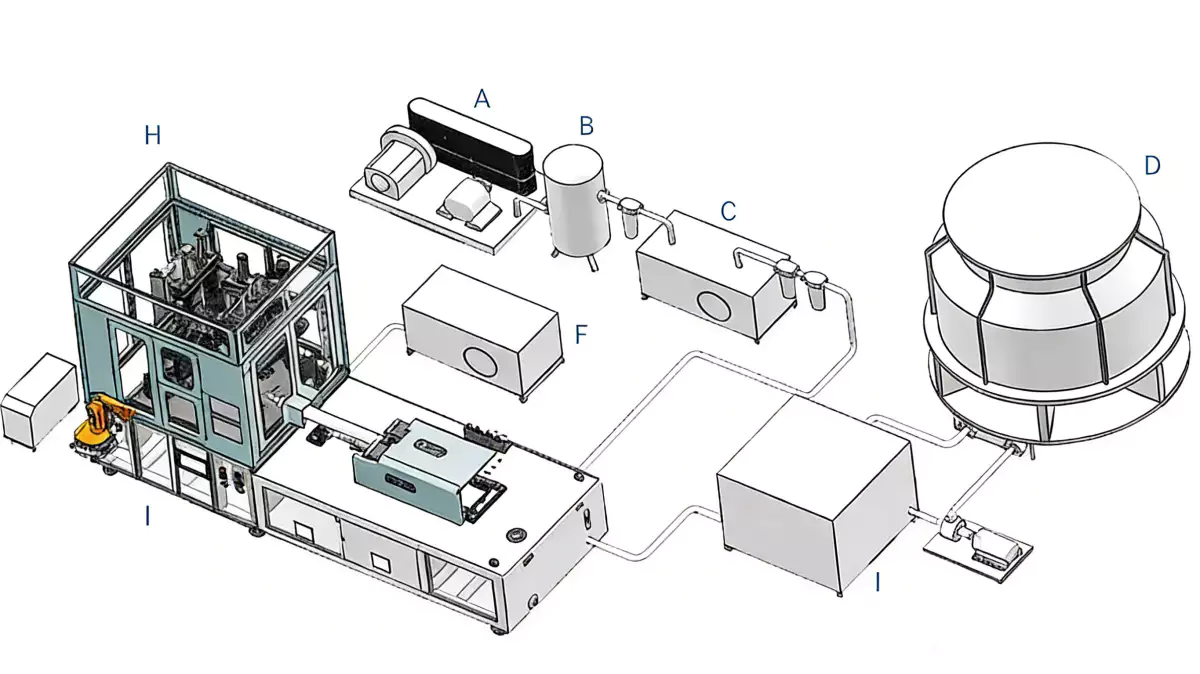
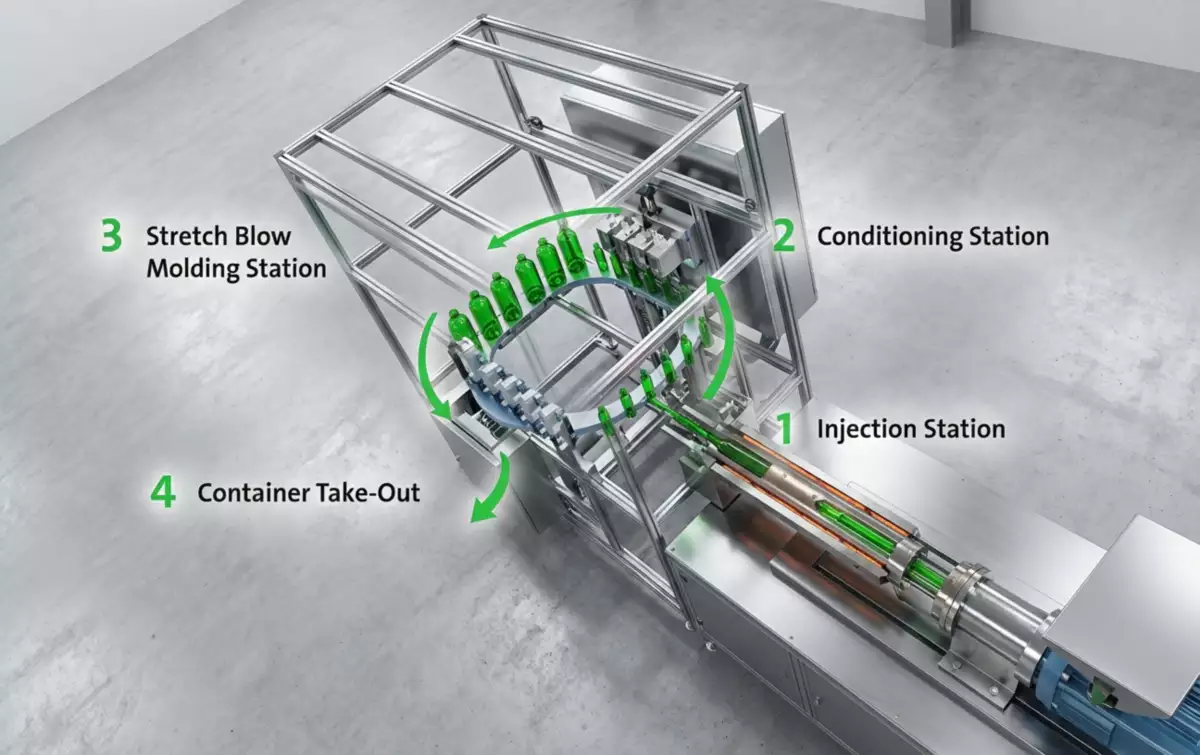
தி multi-material ISBM platform overview also helps frame how machine architecture, materials, utilities, and bottle applications fit together at line level.
Tune Preform and Stretch Conditions for the Actual Blend
Viscosity/process response
Viscosity/process response. Variability in polymer history can change fill pressure, stretch behavior and mechanical performance. Trend injection data, preform mass and bottle performance by lot. For viscosity/process response, keep the rPET lot or blend identity attached to the process data because incoming material variability can shift the operating window. If a change improves one region but worsens another, compare the material or energy movement between viscosity/process response and viscosity/process response instead of accepting the first visual improvement. Operators may chase settings when the real input material has shifted.
Blend consistency
Blend consistency. When virgin and recycled pellets are blended, maintain accurate ratio and mixing. Verify gravimetric or batch blending and prevent segregation in conveying. For blend consistency, keep the rPET lot or blend identity attached to the process data because incoming material variability can shift the operating window. Where the outcome depends on material grade or tooling geometry, confirm the approved project limit and then use blend consistency as the next cross-check. A fluctuating blend produces a fluctuating process even if the recipe is fixed.
Track Bottle Performance as Recycled Content Changes
Bottle validation
Bottle validation. Check wall distribution, clarity, color, drop, top load, leak and application-specific tests at the intended recycled content. Validate worst-case or representative incoming variability. For bottle validation, keep the rPET lot or blend identity attached to the process data because incoming material variability can shift the operating window. When the project is near a machine or material limit, require a molding trial that isolates bottle validation and then challenges bottle validation under the same bottle specification. Passing one clean rPET lot does not prove robustness to normal supply variation.
Build a Change-Control Plan for rPET Supply
Change control
Change control. Define when a new supplier, recycled percentage or material specification requires a trial or recipe review. Store approved process windows and quality data by material condition. For change control, keep the rPET lot or blend identity attached to the process data because incoming material variability can shift the operating window. The safest interpretation comes from comparing at least several stable cycles and then verifying change control without changing the rest of the recipe. Uncontrolled feedstock changes can create customer-visible variation without a formal engineering review.
Bottle validation: release evidence
Check wall distribution, clarity, color, drop, top load, leak and application-specific tests at the intended recycled content. Validate worst-case or representative incoming variability. The condition is accepted only when the relevant bottle measurement or functional test remains stable after the process reaches normal operating temperature.
Change control: failure boundary
Uncontrolled feedstock changes can create customer-visible variation without a formal engineering review. Use that failure mode as the boundary for the trial and return to the previous stable condition when the bottle response moves in the wrong direction.
தி ASB-compatible tooling configuration is also relevant when checking how mold interfaces and machine motion must remain compatible during replacement, troubleshooting, or capacity changes.
Questions that arise specifically in How to Process rPET on an ISBM Machine
Can an ISBM machine run 100% rPET?
Some modern systems and resin streams can support very high recycled content, but capability must be verified for the exact machine, feedstock and bottle requirement.
Does rPET need different drying?
It may require different control depending on supply condition. Follow the qualified material guidance and verify moisture management rather than assuming.
Why do black spots increase with some rPET lots?
Possible contributors include incoming contamination, fines, degraded particles, conveying cleanliness or machine dead zones. Use lot and cavity patterns to diagnose.
Should I change stretch settings when recycled content changes?
Only if data show the material response changed. Use controlled trials and bottle tests rather than automatic adjustments.
What should be tracked by rPET lot?
Material identity, drying, blend percentage, injection trends, color/defect data, wall distribution and relevant functional bottle tests.
Practical conclusion
The final decision on How to Process rPET on an ISBM Machine is made by the bottle, not by a single displayed parameter. Use feedstock specification to establish the input, color variability to test the mechanism, and change control to prove the output under stable conditions. Uncontrolled feedstock changes can create customer-visible variation without a formal engineering review.