
How Injection Parameters Affect ISBM Preforms: Practical Technical Guide
How Injection Parameters Affect ISBM Preforms is a practical engineering question, so this guide starts with melt preparation, moves through melt temperature, and ends with bottle-level verification rather than generic ISBM background.
Melt preparationMold coolingDiagnostic separation
Що ця стаття має довести
Trace bottle problems back to the injection-molded preform by understanding how melt preparation, fill, pack, cooling, screw recovery and mold balance affect the input to stretch blowing. A defensible baseline begins with The resin must reach a homogeneous melt without excessive degradation, contamination or moisture-related damage. The first verification method is Stabilize barrel temperatures, screw recovery and material feed before evaluating preform appearance. From there, the article follows only checks that can materially change the answer promised by the title. Where an exact operating value depends on the resin grade, bottle drawing, mold, or delivered machine, the approved project specification controls the final setting.
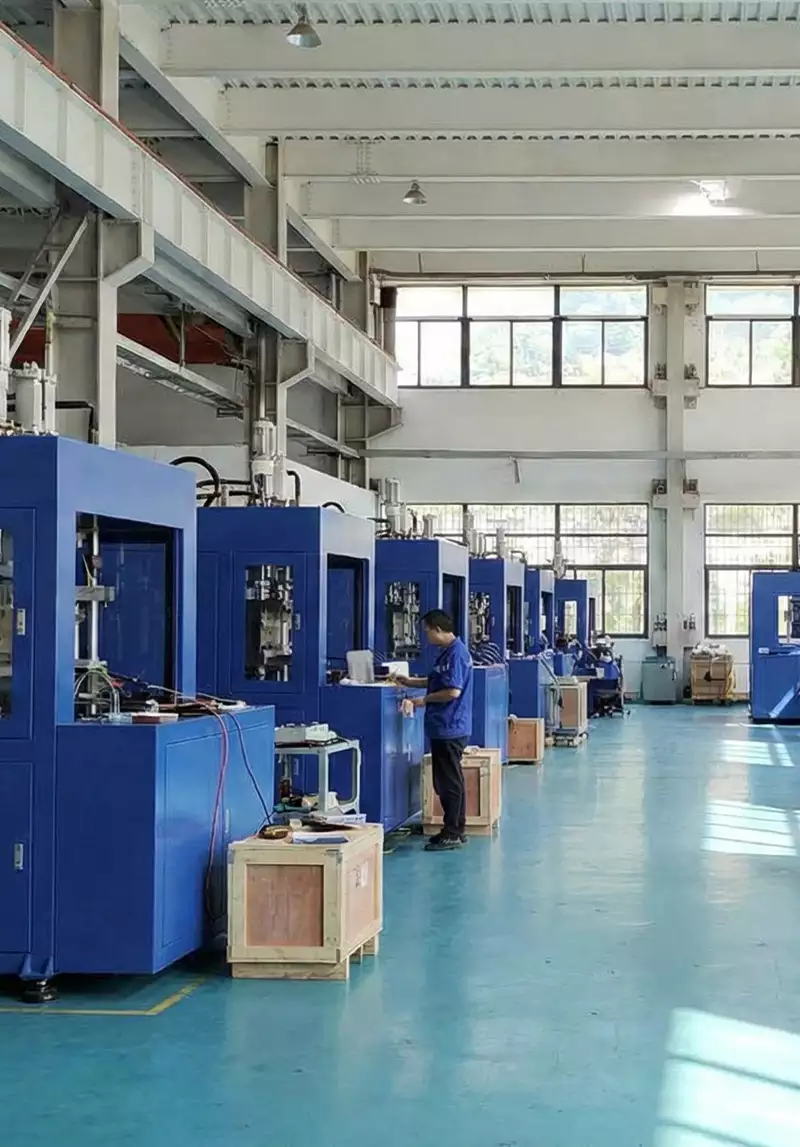
✔️ Melt preparation
The resin must reach a homogeneous melt without excessive degradation, contamination or moisture-related damage. Stabilize barrel temperatures, screw recovery and material feed before evaluating preform appearance.
✔️ Melt temperature
Actual melt condition influences fill, cooling time and the thermal state carried into later stations. Use validated machine settings and verify trends rather than assuming displayed zone setpoints equal resin temperature.
✔️ Fill speed
Injection velocity controls how the cavity fills and can influence shear, gate appearance and balance. Compare cavity fill pattern and pressure trace when adjusting speed in controlled steps.
Для рішень, пов'язаних з інструментами, Інженерія заміни прес-форми ASB-12 підкреслює, чому розмірні інтерфейси, з'єднання охолодження, геометрія порожнини та вирівнювання переміщення повинні розглядатися як частина налаштування машини.
The Bottle Process Starts in the Injection Mold
Melt preparation
Melt preparation. The resin must reach a homogeneous melt without excessive degradation, contamination or moisture-related damage. Stabilize barrel temperatures, screw recovery and material feed before evaluating preform appearance. Observe when the effect of melt preparation first appears in the cycle; that timing helps separate cause from symptom. For this topic, the engineering log should connect melt preparation with the observed bottle condition and then test whether melt preparation supports the same diagnosis. A degraded or non-uniform melt can produce haze, black specks, weak stretch behavior or inconsistent viscosity.
Melt Temperature and Residence History
Melt temperature
Melt temperature. Actual melt condition influences fill, cooling time and the thermal state carried into later stations. Use validated machine settings and verify trends rather than assuming displayed zone setpoints equal resin temperature. Observe when the effect of melt temperature first appears in the cycle; that timing helps separate cause from symptom. Do not judge this factor from the HMI value alone; pair it with the actual bottle result, then continue with melt temperature only after the relationship is clear. Excess heat can increase degradation or cooling demand; insufficient heat can increase pressure and create poor fill or weld behavior.
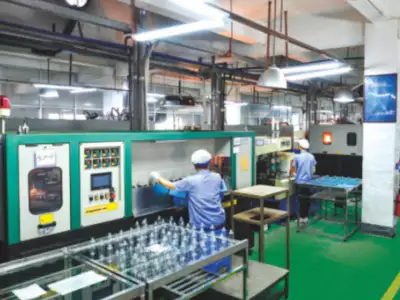
Fill Speed and Cavity Balance
Fill speed
Fill speed. Injection velocity controls how the cavity fills and can influence shear, gate appearance and balance. Compare cavity fill pattern and pressure trace when adjusting speed in controlled steps. Observe when the effect of fill speed first appears in the cycle; that timing helps separate cause from symptom. Keep fill speed at its validated baseline while this item is tested so the bottle response can be attributed to one cause. Very aggressive fill can overheat material locally; very slow fill can create poor flow or excessive orientation in the preform.
Transfer point
Transfer point. The change from velocity-controlled filling to pressure-controlled packing should occur repeatably. Monitor cushion, peak pressure and part mass by cavity. Observe when the effect of transfer point first appears in the cycle; that timing helps separate cause from symptom. Use the smallest controlled change that can prove the effect of transfer point, then restore the baseline before a different adjustment such as transfer point is tried. An unstable transfer point changes preform mass and makes later wall-distribution tuning inconsistent.
Умови роботи для цього конкретного завдання
- Melt preparation
- The resin must reach a homogeneous melt without excessive degradation, contamination or moisture-related damage.
- Melt temperature
- Actual melt condition influences fill, cooling time and the thermal state carried into later stations.
- Fill speed
- Injection velocity controls how the cavity fills and can influence shear, gate appearance and balance.
- Transfer point
- The change from velocity-controlled filling to pressure-controlled packing should occur repeatably.
Pack/Hold and Preform Mass Consistency
Pack and hold
Pack and hold. Packing compensates for material shrinkage while the gate remains effective and influences preform mass and dimensions. Establish a stable mass and neck/body dimension without excessive stress or flash. Observe when the effect of pack and hold first appears in the cycle; that timing helps separate cause from symptom. This factor belongs in the setup sheet because it directly changes the conditions under which pack and hold is evaluated. Overpacking adds stress and cooling load; underpacking can create sink, low mass or dimensional drift.
| Елемент | Інженерне питання | Практична перевірка |
|---|---|---|
| Melt preparation | The resin must reach a homogeneous melt without excessive degradation, contamination or moisture-related damage. | Stabilize barrel temperatures, screw recovery and material feed before evaluating preform appearance. |
| Melt temperature | Actual melt condition influences fill, cooling time and the thermal state carried into later stations. | Use validated machine settings and verify trends rather than assuming displayed zone setpoints equal resin temperature. |
| Fill speed | Injection velocity controls how the cavity fills and can influence shear, gate appearance and balance. | Compare cavity fill pattern and pressure trace when adjusting speed in controlled steps. |
| Transfer point | The change from velocity-controlled filling to pressure-controlled packing should occur repeatably. | Monitor cushion, peak pressure and part mass by cavity. |
| Pack and hold | Packing compensates for material shrinkage while the gate remains effective and influences preform mass and dimensions. | Establish a stable mass and neck/body dimension without excessive stress or flash. |
| Mold cooling | Injection-core and cavity cooling determine how much heat remains in different preform regions at transfer. | Check cooling-water balance and compare preform temperature or bottle thickness by cavity. |
| Умова випуску | When a bottle defect appears, retain and inspect the corresponding preform if possible. Compare preform mass, dimensions, appearance and cavity position before changing blow parameters. | |
Injection Cooling and Thermal Memory
Mold cooling
Mold cooling. Injection-core and cavity cooling determine how much heat remains in different preform regions at transfer. Check cooling-water balance and compare preform temperature or bottle thickness by cavity. Observe when the effect of mold cooling first appears in the cycle; that timing helps separate cause from symptom. If the result differs by cavity, compare the local hardware related to mold cooling before moving on to mold cooling. A partially blocked circuit can masquerade as a blow-stage temperature problem.
The multi-material ISBM platform overview also helps frame how machine architecture, materials, utilities, and bottle applications fit together at line level.
Screw Recovery and Shot Repeatability
Screw recovery
Screw recovery. The screw must plasticize the next shot consistently before the cycle requires injection. Trend recovery time and back-pressure-related indicators while production is stable. Observe when the effect of screw recovery first appears in the cycle; that timing helps separate cause from symptom. This item is considered resolved only when the finding remains repeatable after thermal stabilization and the next check, screw recovery, does not contradict it. Recovery variation changes melt history and can become a hidden cycle-time bottleneck.
Gate quality
Gate quality. The gate region must be centered, clean and strong enough for later stretching and base formation. Inspect gate vestige, whitening, stringing, contamination and off-center core condition before blowing. Observe when the effect of gate quality first appears in the cycle; that timing helps separate cause from symptom. For repeatability, define who measures gate quality, where it is measured, and what bottle evidence is required before checking gate quality. A defective gate can become a base crack, off-center wall distribution or cosmetic reject.
Gate and Neck Quality
Neck and lip
Neck and lip. The finish is created during injection and should be dimensionally stable before stretch blowing. Measure critical closure dimensions and check flash, short fill and damage at handling points. Observe when the effect of neck and lip first appears in the cycle; that timing helps separate cause from symptom. Record the bottle response beside the setting or measurement for neck and lip; that record becomes the starting condition when neck and lip is reviewed. Blow-stage settings cannot correct an injection-molded thread or sealing surface that is out of specification.
Use Preform Data to Separate Injection from Blow Problems
Diagnostic separation
Diagnostic separation. When a bottle defect appears, retain and inspect the corresponding preform if possible. Compare preform mass, dimensions, appearance and cavity position before changing blow parameters. Observe when the effect of diagnostic separation first appears in the cycle; that timing helps separate cause from symptom. If the symptom or performance target does not move as predicted, return diagnostic separation to the baseline and investigate diagnostic separation rather than stacking corrections. Changing stretch and pressure to compensate for an unstable preform creates a fragile process window.
Neck and lip: release evidence
The finish is created during injection and should be dimensionally stable before stretch blowing. Measure critical closure dimensions and check flash, short fill and damage at handling points. The condition is accepted only when the relevant bottle measurement or functional test remains stable after the process reaches normal operating temperature.
Diagnostic separation: failure boundary
Changing stretch and pressure to compensate for an unstable preform creates a fragile process window. Use that failure mode as the boundary for the trial and return to the previous stable condition when the bottle response moves in the wrong direction.
The ISBM replacement mold design reinforces the practical need to control mounting geometry, thermal behavior, transfer position, and cavity alignment rather than treating the mold as an isolated component.
Questions that arise specifically in How Injection Parameters Affect ISBM Preforms
Can blow molding correct a light preform?
No. Stretch blowing redistributes existing material; it cannot replace missing resin.
Why should I weigh preforms by cavity?
Cavity-level mass data can reveal hot-runner imbalance, packing variation or gate problems that later appear as bottle differences.
Does injection cooling affect blow molding?
Yes in one-step ISBM because the preform moves into later stations with a thermal history created partly by the injection mold.
What injection defect most directly affects the closure?
Neck flash, short fill, dimensional error or damage in the injection-molded finish can directly affect cap fit and sealing.
Why avoid changing injection and blow settings at the same time?
It removes the ability to identify which stage caused the bottle response and makes troubleshooting less repeatable.
Практичний висновок
The working method for How Injection Parameters Affect ISBM Preforms is evidence first: establish melt preparation, isolate the effect of mold cooling, and use diagnostic separation as the final production check. A degraded or non-uniform melt can produce haze, black specks, weak stretch behavior or inconsistent viscosity.