
How to Troubleshoot ISBM Bottle Gate Defects: Practical Technical Guide
This guide treats How to Troubleshoot ISBM Bottle Gate Defects as a sequence of measurable decisions. It begins with the physical product requirement, then tests the process mechanisms that can change the bottle, and finishes with a release condition that can be documented.
Defect typeStringingFunctional validation
Бұл мақала нені дәлелдеуі керек
Diagnose gate defects such as whitening, cracks, strings, high vestige, off-center base marks or contamination by separating injection-gate condition from later stretch and base-forming problems. A defensible baseline begins with Classify whitening, crack, string, excessive vestige, sink, off-center mark or black contamination separately. The first verification method is Inspect with magnification and by cavity. From there, the article follows only checks that can materially change the answer promised by the title. Where an exact operating value depends on the resin grade, bottle drawing, mold, or delivered machine, the approved project specification controls the final setting.
✔️ Defect type
Classify whitening, crack, string, excessive vestige, sink, off-center mark or black contamination separately. Inspect with magnification and by cavity.
✔️ Preform evidence
Examine the gate immediately after injection for stress, stringing, incomplete freeze or off-center geometry. Retain samples before blowing.
✔️ Centering
Check core, gate insert and stretch rod alignment relative to the bottle base. Measure or inspect cavity-to-cavity centering.
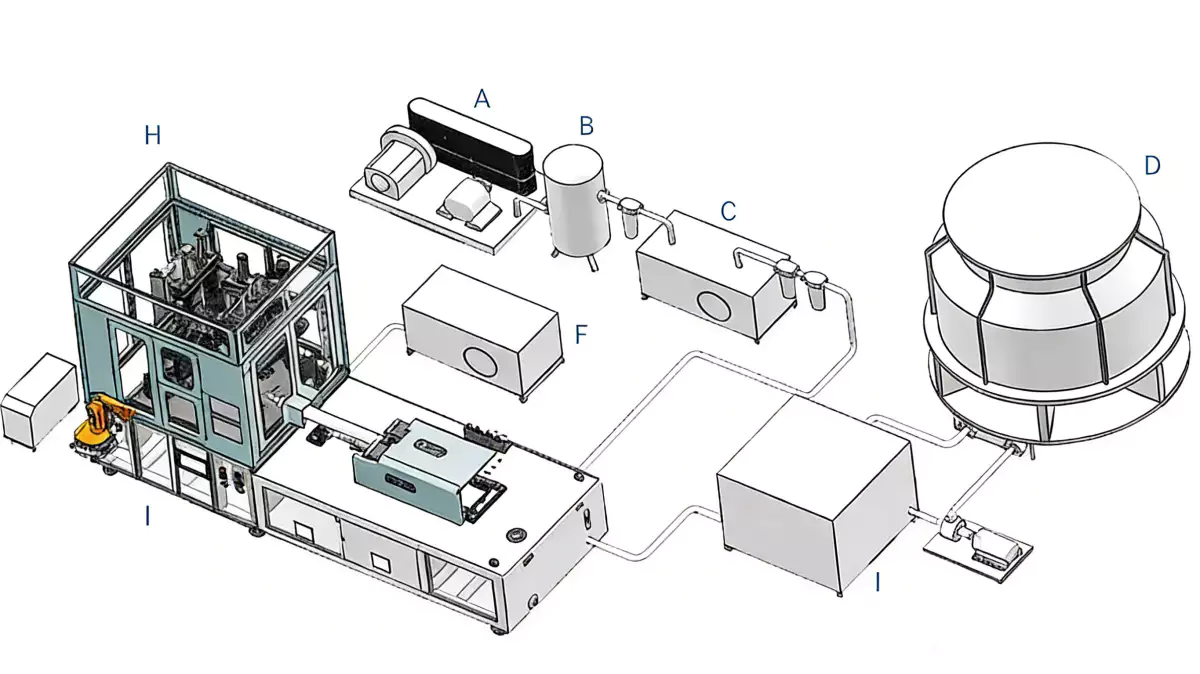
The ASB-12 инжекциялық құрал-саймандарын ауыстыру тапсырма қалып алмасуды, өлшемдерді сәйкестендіруді, салқындату өнімділігін немесе ISBM станциялары арасында қайталанатын тасымалдауды қамтитын пайдалы жабдық мысалы болып табылады.
Identify the Exact Gate Defect
Defect type
Defect type. Classify whitening, crack, string, excessive vestige, sink, off-center mark or black contamination separately. Inspect with magnification and by cavity. The diagnostic test should show whether defect type can physically create the observed defect before a repair or parameter change is accepted. This factor belongs in the setup sheet because it directly changes the conditions under which defect type is evaluated. The word gate defect covers several mechanisms and should not trigger one generic adjustment.
Inspect the Preform Gate before Stretch Blowing
Preform evidence
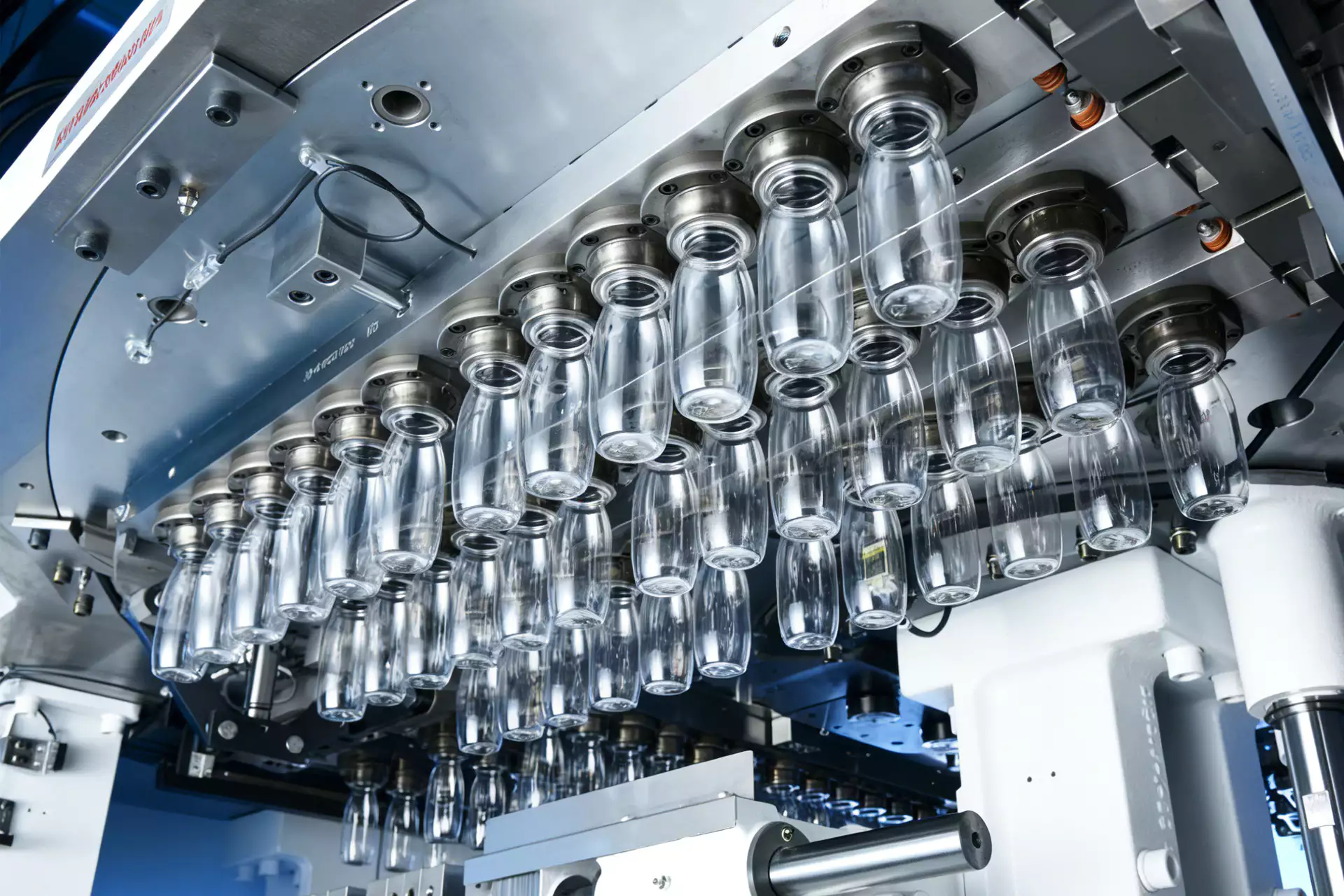
Preform evidence. Examine the gate immediately after injection for stress, stringing, incomplete freeze or off-center geometry. Retain samples before blowing. The diagnostic test should show whether preform evidence can physically create the observed defect before a repair or parameter change is accepted. If the result differs by cavity, compare the local hardware related to preform evidence before moving on to preform evidence. If the defect exists in the preform, final blow pressure is not the root cause.
Check Gate Centering and Core Alignment
Centering
Centering. Check core, gate insert and stretch rod alignment relative to the bottle base. Measure or inspect cavity-to-cavity centering. The diagnostic test should show whether centering can physically create the observed defect before a repair or parameter change is accepted. This item is considered resolved only when the finding remains repeatable after thermal stabilization and the next check, centering, does not contradict it. An eccentric gate can make the base stretch unevenly and create a thin side or visible swirl.
Gate cooling
Gate cooling. The gate must solidify enough for clean transfer without being so cold that later stretching becomes brittle. Review local injection cooling and cycle time. The diagnostic test should show whether gate cooling can physically create the observed defect before a repair or parameter change is accepted. For repeatability, define who measures gate cooling, where it is measured, and what bottle evidence is required before checking gate cooling. Too-hot gate material can deform; too-cold material can whiten or crack during base stretch.
Осы нақты тапсырма үшін жұмыс шарттары
- Defect type
- Classify whitening, crack, string, excessive vestige, sink, off-center mark or black contamination separately.
- Preform evidence
- Examine the gate immediately after injection for stress, stringing, incomplete freeze or off-center geometry.
- Centering
- Check core, gate insert and stretch rod alignment relative to the bottle base.
- Gate cooling
- The gate must solidify enough for clean transfer without being so cold that later stretching becomes brittle.
Check Injection Fill, Pack and Gate Cooling
Injection pack
Injection pack. Excessive or unstable packing can increase gate stress or vestige behavior. Trend preform mass and cushion and compare with the approved baseline. The diagnostic test should show whether injection pack can physically create the observed defect before a repair or parameter change is accepted. Record the bottle response beside the setting or measurement for injection pack; that record becomes the starting condition when injection pack is reviewed. Changing pack to fix the gate can also change preform mass and bottle wall distribution.
| Тауар | Инженерлік сұрақ | Тәжірибелік тексеру |
|---|---|---|
| Defect type | Classify whitening, crack, string, excessive vestige, sink, off-center mark or black contamination separately. | Inspect with magnification and by cavity. |
| Preform evidence | Examine the gate immediately after injection for stress, stringing, incomplete freeze or off-center geometry. | Retain samples before blowing. |
| Centering | Check core, gate insert and stretch rod alignment relative to the bottle base. | Measure or inspect cavity-to-cavity centering. |
| Gate cooling | The gate must solidify enough for clean transfer without being so cold that later stretching becomes brittle. | Review local injection cooling and cycle time. |
| Injection pack | Excessive or unstable packing can increase gate stress or vestige behavior. | Trend preform mass and cushion and compare with the approved baseline. |
| Stringing | Material strings can indicate gate temperature, valve function, resin condition or decompression issues depending on the system. | Observe whether strings originate from one nozzle/cavity and follow the machine or hot-runner procedure. |
| Босату шарты | After the visual gate is corrected, run leak, drop, burst or other approved bottle tests. Check wall thickness around the base and gate. | |
Check Stretch-Rod Contact with the Gate Region
Stringing
Stringing. Material strings can indicate gate temperature, valve function, resin condition or decompression issues depending on the system. Observe whether strings originate from one nozzle/cavity and follow the machine or hot-runner procedure. The diagnostic test should show whether stringing can physically create the observed defect before a repair or parameter change is accepted. If the symptom or performance target does not move as predicted, return stringing to the baseline and investigate stringing rather than stacking corrections. Random purge or temperature changes can hide a mechanical valve issue.
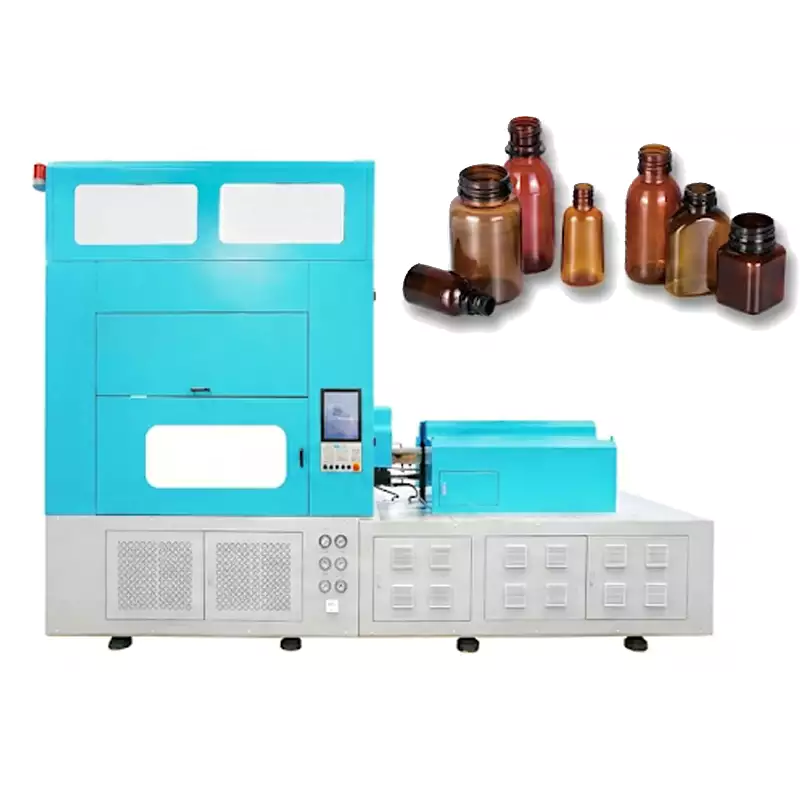
Бұл тақырып үшін, бір сатылы ISBM машина портфолиосы процестің талабын біріктірілген шайырдан бөтелкеге дейінгі платформаға қосу үшін пайдалы жабдық контекстін ұсынады.
Check Base Temperature and Blow Timing
Rod contact
Rod contact. The stretch rod often approaches the preform base/gate region and can create stress if misaligned or poorly timed. Inspect tip condition, stroke and centering. The diagnostic test should show whether rod contact can physically create the observed defect before a repair or parameter change is accepted. If a change improves one region but worsens another, compare the material or energy movement between rod contact and rod contact instead of accepting the first visual improvement. A damaged tip can repeatedly mark the same base position.
Base heating
Base heating. Ensure the gate region reaches a stretchable condition appropriate to the intended base geometry. Correlate whitening with local temperature and thickness. The diagnostic test should show whether base heating can physically create the observed defect before a repair or parameter change is accepted. Where the outcome depends on material grade or tooling geometry, confirm the approved project limit and then use base heating as the next cross-check. Heating the entire preform to fix one cold gate zone can make the sidewall too soft.
Inspect Mold Gate Components for Wear or Deposits
Base insert
Base insert. Check gate-pocket geometry, venting and cooling in the blow mold. Inspect for wear or buildup at the location matching the defect. The diagnostic test should show whether base insert can physically create the observed defect before a repair or parameter change is accepted. When the project is near a machine or material limit, require a molding trial that isolates base insert and then challenges base insert under the same bottle specification. A bottle-side mark can be a cavity-surface defect rather than a preform problem.
Verify the Corrected Gate after Bottle Testing
Functional validation
Functional validation. After the visual gate is corrected, run leak, drop, burst or other approved bottle tests. Check wall thickness around the base and gate. The diagnostic test should show whether functional validation can physically create the observed defect before a repair or parameter change is accepted. The safest interpretation comes from comparing at least several stable cycles and then verifying functional validation without changing the rest of the recipe. A visually smooth gate can still be mechanically weak if the correction over-thins surrounding material.
Base insert: release evidence
Check gate-pocket geometry, venting and cooling in the blow mold. Inspect for wear or buildup at the location matching the defect. The condition is accepted only when the relevant bottle measurement or functional test remains stable after the process reaches normal operating temperature.
Functional validation: failure boundary
A visually smooth gate can still be mechanically weak if the correction over-thins surrounding material. Use that failure mode as the boundary for the trial and return to the previous stable condition when the bottle response moves in the wrong direction.
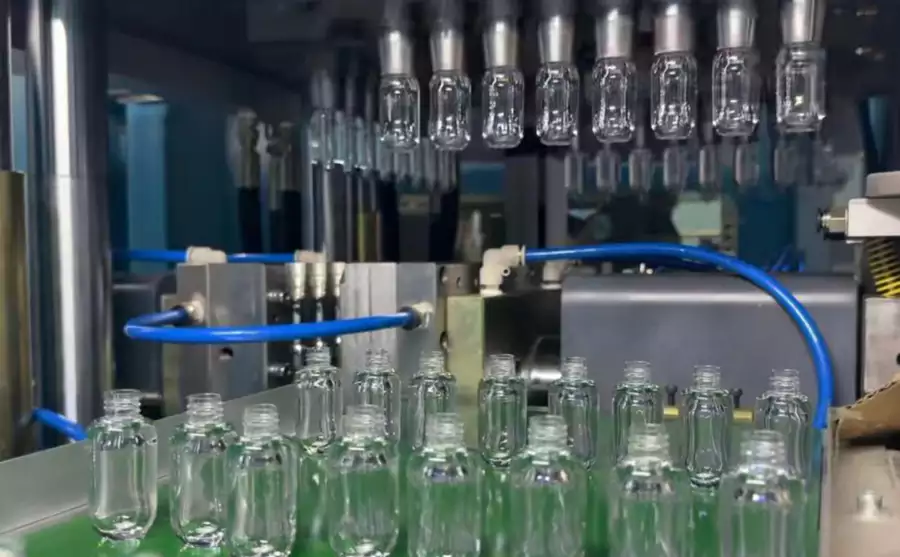
Талапты аппараттық құралға айналдырған кезде, HGY50-V3-EV машина конфигурациясы инъекция, термиялық кондиционерлеу, созылу-үрлеу қозғалысы және басқарудың ықшам бір сатылы платформада қалай ұйымдастырылғанын көрсетеді.
Questions that arise specifically in How to Troubleshoot ISBM Bottle Gate Defects
Why does a gate turn white after blowing?
Check local temperature, stretch demand, rod alignment and preform gate stress. Whitening often signals excessive local strain rather than insufficient final pressure.
What causes gate stringing?
Possible causes include resin/gate temperature, valve or hot-runner behavior, decompression and material degradation. Identify whether it is cavity-specific.
Can a stretch rod damage the gate?
Yes if it is misaligned, damaged or timed incorrectly relative to the preform base.
Why is the gate off-center in the bottle base?
Check preform/core centering, transfer alignment, rod centering and whether the bubble expands symmetrically.
Should gate defects be checked before blowing?
Yes. Separating injection-gate quality from stretch-blow effects is one of the fastest diagnostic steps.
Практикалық қорытынды
For How to Troubleshoot ISBM Bottle Gate Defects, begin by documenting defect type, then test stringing without moving unrelated settings, and release the process only after functional validation is verified on every active cavity. A visually smooth gate can still be mechanically weak if the correction over-thins surrounding material.